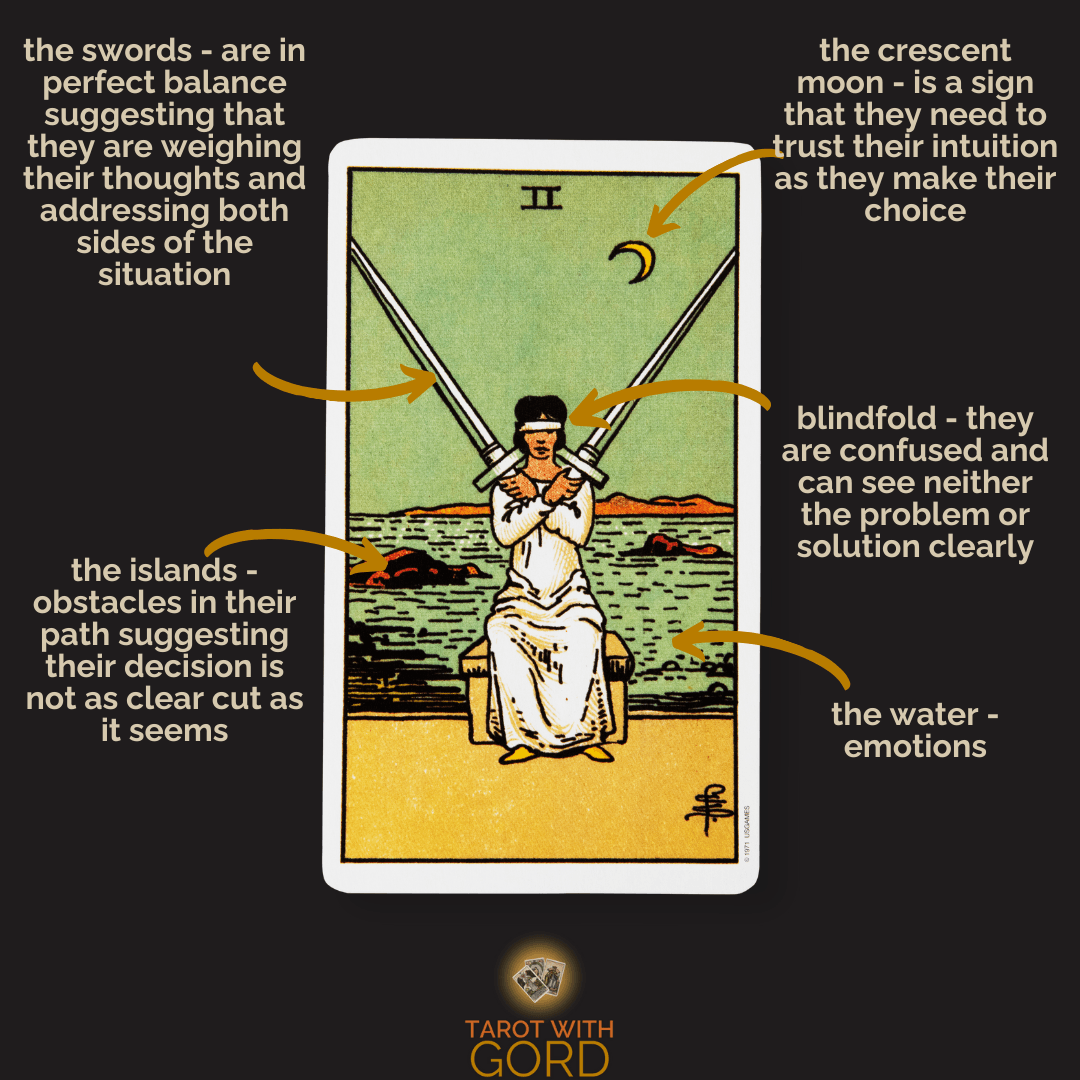
Man, sometimes you just get stuck, you know? Like, really, truly stuck. Not stuck in traffic, but stuck in your head, like a hamster on a wheel going nowhere fast. That’s exactly where I found myself a while back, feeling all muddled up, trying to sort out a bunch of stuff both at work and in my personal life. It was like I had two big, heavy swords crossed in front of me, blocking the view, and I just couldn’t see past them to what needed doing next.
I remember it was a particularly messy autumn. Projects were piling up, friends were asking for advice on their own dramas, and my own home life felt like a tangled ball of yarn. Every evening, I’d flop onto the couch, my brain just buzzing with half-formed thoughts and worries, unable to land on anything solid. I’d try to figure out what was most important, what to tackle first, but everything felt equally urgent and equally impossible. I was pretty much blindfolded, metaphorically speaking, to any clear path forward. It was frustrating as heck.
Hitting the Wall and Looking for a Way Out
For a good few weeks, I tried the usual thing: just powering through. “Push harder, you idiot,” I’d tell myself. “Just focus!” But you know how that goes. It just makes the fog thicker. The more I tried to force clarity, the more opaque everything became. I was losing sleep, getting snappy with folks, and just generally being a less-than-stellar version of myself. It wasn’t sustainable, and deep down, I knew it. That’s when the realization hit me, not like a lightning bolt, but more like a slow, uncomfortable ache: I wasn’t going to think my way out of this mess. I had to do my way out.
The first step I took was a really simple one, almost dumb in its simplicity, but it made all the difference. I grabbed a pen and a big, blank notebook. Not my laptop, not a fancy app, just good old paper. I sat down one Saturday morning, brewed a huge pot of coffee, and just started dumping everything out of my head. Every single thought, every worry, every half-finished task, every nagging concern – good, bad, ugly – it all went onto the paper. No filtering, no judging, just a pure brain vomit. My handwriting got worse and worse as I scribbled faster and faster, trying to catch all the little bits before they slipped away.
The Great Brain Dump and Sorting Through the Mess
After about an hour, my hand ached, and the page was a chaotic mess of bullet points, arrows, circles, and angry underlines. But something funny happened: a tiny bit of the tension in my shoulders eased. Just getting it all out felt like I’d opened a pressure valve. I looked at that jumbled mess, and even though it was still a mess, it was outside my head now. It was tangible. I could actually see the sheer volume of “stuff” that was making me feel so overwhelmed.
The next thing I did was try to find some kind of order in the chaos. I took a fresh page and started categorizing. I drew big bubbles for “Work Stuff,” “Family Stuff,” “Personal Growth,” “Home Projects,” and so on. Then, I painstakingly went through my brain dump, drawing lines and rewriting each item into its respective category. It felt like I was physically untangling all those threads. This process alone started to highlight patterns. I saw that a lot of my “work stuff” was actually tied to one big, scary deliverable, and a lot of my “family stuff” was really about communication that I’d been avoiding.
Once I had things loosely categorized, I started a new round of sorting. This time, I focused on what I could actually act on. I’d ask myself for each item: “Can I do something about this right now? Or this week?” If the answer was yes, it moved to a “To Do” list. If it was a big, hairy monster that couldn’t be done in one go, I’d break it down into smaller, bite-sized “first steps.” So, instead of “Finish the Dreaded Report,” it became “Outline the report’s intro,” or “Gather data for Section 1.” You know, real, actionable little things.
Then came the tough part: prioritizing. With my “To Do” list and “First Steps” list in front of me, I honestly tried to pick just one or two things that, if I got them done, would have the biggest impact or unlock other things. It felt kinda like pulling a loose thread and hoping a whole section unravels. I decided to start with that one big work deliverable because it was looming large and messing with my focus on everything else. I committed to just tackling that “outline the intro” task first thing the next morning, no matter what.
Breaking Through and Finding the Light
Actually taking those first few deliberate steps, however small, was like finally prying those swords apart just enough to peek through. Slowly, day by day, as I chipped away at those categorized and prioritized tasks, the cloud in my head started to dissipate. The blindfold wasn’t just ripped off in one go; it slid down inch by painful inch. I wasn’t just thinking about the problem anymore; I was engaging with it, one small, actionable chunk at a time.
I remember one specific Tuesday afternoon, I was reviewing the outline for that big work report, and suddenly, it just clicked. The structure became clear, the arguments fell into place, and I saw exactly what I needed to write. It wasn’t just the report; it was like the process I’d built for that task spilled over into other areas. I started applying the same brain-dump-categorize-prioritize method to other messy situations. I sat down with my partner to talk through some of the “family stuff” I’d avoided. I finally scheduled that annoying home repair. Each tiny victory, each moment of clarity, built on the last.
It wasn’t magic, and it certainly wasn’t instant. It was a grind, a process of forcing myself to externalize, organize, and then deliberately act. But stepping back now, I can see how vital that whole journey was. It taught me that clarity isn’t something you wait for; it’s something you actively forge through honest introspection and consistent action. And sometimes, you just gotta write down every crazy thought in your head to even begin to see the path ahead.