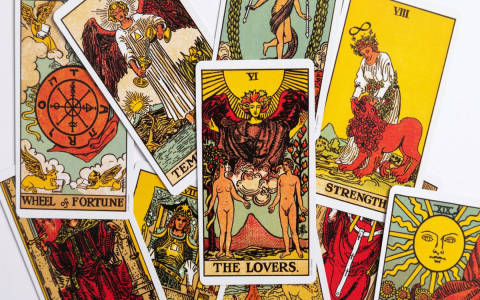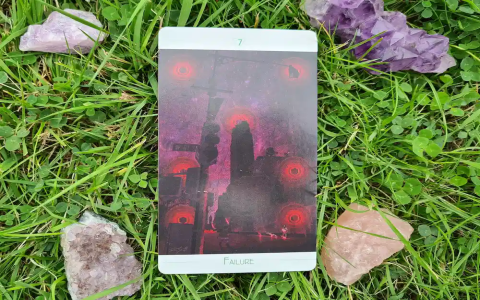

Why does the tarot deck order matter? I used to think that was the stupidest question. Seriously. I bought my first deck, maybe a year and a half ago. It was the classic RWS. I ripped it open, gave it a quick shuffle, and started pulling cards. I read the little white book a bit, but mostly I just pulled what felt right and jammed the deck back into the box when I was done. It’s supposed to be random, right? A reflection of chaos? That’s what I figured.
For months, my readings were just… flat. They didn’t land. I’d draw the Tower and then the Ten of Pentacles. One reading would scream disaster, the next would whisper prosperity. They contradicted each other constantly. I’d try to blend them, but it felt like forcing squares into circle holes. It sucked the fun out of everything. I was reading for myself, for friends, for neighbors—and I felt like a total fraud every time because nothing ever made any real sense. I thought maybe I was just rubbish at it, maybe I didn’t have the “gift.”
The Reading That Went Sideways
The whole thing came to a head last fall. A really close friend, Sarah, was facing some absolute mess with her job—like, career-ending stuff. She was panicked. She begged me for a reading. I figured, okay, high stakes, let’s do a big spread. I pulled out my deck, shuffled, and laid out the Celtic Cross.
Man, it was a trainwreck. The cross position, the basis of the conflict, was all minor arcana court cards—people, people, people. The outcome card was something benign, like the Three of Wands, but the foundation card was the Death card. And the hopes/fears card was the Hierophant, just sitting there looking stern. I swear, the whole thing read like a poorly translated novel. I tried to explain it to Sarah, stumbling over my words, throwing out vague interpretations. She just stared at me, face getting paler and paler.

She said, “So… am I going to die at work or get a promotion?”
I couldn’t give her an answer. A useful answer. I made her more anxious than before the reading. I felt sick about it. I packed up my deck right then and shoved it in the back of a drawer. I didn’t touch it for weeks.
The Painful Reset
That failure forced me to think. I remembered something an old acquaintance, who’s been reading for twenty years, once muttered about “respecting the current.” I didn’t get it then, but after the Sarah disaster, I was desperate. I dragged the deck out and decided I needed to understand what the acquaintance meant.
I realized I hadn’t looked at the deck outside of a shuffled mess since I opened it. So, I grabbed the whole stack of 78 cards. I poured a coffee, put on some music, and I started sorting. It was tedious, slow work, like organizing a massive filing cabinet that had been dumped on the floor. But I saw the process through. I had to. I literally had to physically put the deck back in its original factory order. I used the tiny booklet as a reference, card by card, one by one.
This is what I did:
- I tackled the Major Arcana first. I found The Fool, put it down. Then The Magician. The High Priestess. I laid them out in two long lines on my table, from 0 to 21. Seeing them in order wasn’t just numbers. It was a damn story. It was a man starting a journey, learning lessons, facing trials, and finally reaching enlightenment. It wasn’t just 22 random strong cards; it was the whole human journey, start to finish.
- Next came the Minors. I kept them separated by suit. Wands first, then Cups, Swords, and finally Pentacles. Within each suit, I put the Ace down, then the Two, all the way up to the Ten. Then the Page, Knight, Queen, and King.
This process took me almost four hours. Four hours of intensely looking at cards in a specific, linear order. I wasn’t interpreting them yet; I was just organizing them. But man, seeing that linear progression for each suit—how the Aces begin with energy, how the journey moves to the Tens (completion), and how the Court Cards handle the resulting experience—it clicked.
The Boost
When I was done, I had two neat stacks: the Majors and the Minors. I didn’t shuffle them immediately. I just let them sit there, fully ordered, for a day. I kept looking at them. It wasn’t about memorizing the order, but about absorbing the sequence—the flow of energy, the narrative.
Now, I get it. The order matters not because you read the deck in order (you still shuffle, obviously), but because the inherent, ordered structure is the story backbone of the entire system. If you never put the deck back together and see the story flow from 0 to 21, and Ace to King, you lose the narrative context. You’re just pulling random flashes of light instead of scenes from a movie.
I now reset my deck to its original order at the end of every week, no matter what. I shuffle the hell out of it before the first reading, but I make sure I always put it back to order before I put it to rest. It’s like cleaning a slate. I can feel the difference when I start the next session. The meanings jump out quicker, the contradictions disappear, and the cards talk to each other the way they are supposed to. Sarah’s reading? If I had done this before, I would have seen the journey from Death to the Three of Wands, and I could have given her real, constructive advice. I messed up because I hadn’t respected the basic framework. Now I do. I truly do.