The Absolute Mess That Started This Research
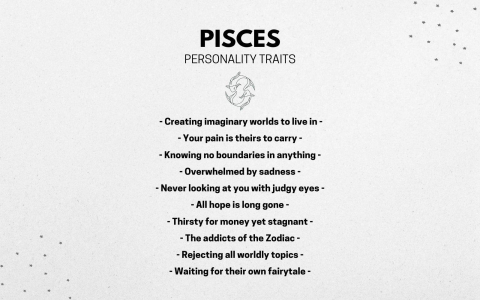
Man, I gotta tell you, for the last six months, I was dealing with this situation—a complete psychological knot—and I just could not untangle it. It wasn’t about coding or fixing a server, it was about a person, specifically a Pisces I was working closely with on a major volunteer project. They were driving me up the wall. One day, they’d be the most compassionate, understanding collaborator you could ask for, totally dedicated to the community impact. The next day? They’d vanish. Zero response. Acted like the project, and frankly, I, didn’t exist. It was whiplash. It felt like walking on water that kept turning into quicksand.
I’m a guy who likes structure. I like A leads to B. With this person, it was A leads to Z, maybe C, and then back to A when the moon was right. I kept thinking, are they manipulative? Are they just flakey? It didn’t make sense, because when they were present, their insight was next level, like they were predicting outcomes six months ahead. But the inconsistency was a dumpster fire. I knew I had to systematically break down the observed confusion if I was going to keep my sanity and finish the project.
Logging the Contradictions: My Initial Data Collection
I started digging. I didn’t just read the airy-fairy stuff about ‘dreamers’ and ‘fish.’ I needed hard data, my own personal logs. I grabbed a cheap notebook and started a simple two-column system:
- Column 1: Observed Behavior (Action/Word)
- Column 2: Stated Intent/Motivation (If available)
I tracked every major interaction for three weeks. The results were astounding, and frankly, hilarious in retrospect. For example, I recorded one entry where they spent four hours listening to a team member’s personal tragedy (Column 1: Deep Empathy, Active Listening, Offering Solutions). Then, the very next day, they completely ignored an urgent email about a deadline they had committed to (Column 1: Total Avoidance, Detached). When I confronted them gently, they just shrugged and said, “I didn’t feel like dealing with it yet.”

The pattern I pulled out of the data was not simple contradiction, it was simultaneous existence. They weren’t moving from one state to another; they seemed to be occupying both states at once—deeply connected and totally unavailable. That’s when I realized the confusion wasn’t my perception; it was the reality they operated within.
Expanding the Sample and Testing the Intuition Theory
Once I had established this core contradiction, I needed to test the “intuitive nature” part of the equation. I reached out to three other people I knew who were Pisces—two distant friends and one former colleague. I didn’t tell them what I was doing. I simply asked them for advice on hypothetical scenarios involving emotional conflict or complex interpersonal dynamics.
What I observed was fascinating. Their initial, gut reactions were almost always spot-on, hitting the emotional core of the hypothetical situation immediately. They would articulate the underlying feeling perfectly. But when I pushed them for a logical, step-by-step plan for resolution? They’d stumble. They’d get vague. They’d retreat into metaphor.
I started piecing together the core mechanism. They don’t process reality through rigid boundaries. They feel everything simultaneously. This isn’t their superpower, it’s just how the input flows. Imagine trying to use a delicate, ultra-sensitive microphone in a crowded concert hall. They pick up the main singer, the backup band, the ambient noise, and the security guard chewing gum in the back row. All at once. And then you ask them to filter out everything but the triangle player.
Their confusing traits—the flakiness, the sudden shifts in mood, the sometimes painful honesty followed by total avoidance—were just the necessary physical and emotional mechanisms they employed to manage that overwhelming input stream.
The Practical Takeaway and Implementing the Shift
This realization fundamentally changed how I approached and communicated with M, the original source of the headache. I stopped demanding consistency or linear logic. I figured out I was speaking C++ to someone operating in pure poetry.
I started treating their communication as a barometer of their emotional energy, not a legal contract. If they said something vague, instead of pressing for details, I’d simply validate the feeling they were expressing, even if it seemed irrational. When they vanished, I stopped chasing. I just assumed the sensory overload was too much, and I’d check back later with low-pressure questions.
This simple shift—moving from demanding logical accountability to respecting intuitive flow—was the key. The confusing nature didn’t go away, but the conflict did. I stopped getting frustrated, because I understood the ‘why.’ They weren’t intentionally confusing me; they were just navigating a reality where their boundaries are permeable, and they have to constantly reconfigure their emotional landscape just to function.
The project finished, successfully, and our working relationship stabilized, simply because I stopped trying to force a square peg into a beautifully nebulous hole. The confusion, I learned, is just the sound of two realities colliding: the structured world and the boundless ocean of intuition.
My final conclusion: If you want consistency, go talk to a Capricorn. If you want insight that feels like prophecy but comes with zero manual, stick with the fish. Just make sure you bring a life vest.