Man, I gotta tell you, for the longest time, I just thought the I Ching was some super complex, academic stuff meant for old scholars who had nothing better to do than stare at sticks. I always saw the books, flipped through the cryptic poetry, and immediately closed them. It just felt too deep, you know? Like trying to read code before you even know what a compiler is.
But lately, I’ve been feeling totally stuck. Not in a bad way, just… stagnant. I’ve been putting effort into this side project for months, pouring hours into it, and seeing absolutely zero return. It was driving me nuts. I was ready to throw in the towel, delete the whole thing, and just binge-watch TV for a week.
The Decision to Try Something Completely New
One Tuesday night, scrolling through some ancient philosophy forums—don’t ask me why—I stumbled across a thread talking about Hexagram 42, “Increase.” Someone mentioned how people always misunderstand it, thinking it means instant wealth, when really it’s about inner alignment. That hit me. I realized maybe my problem wasn’t the project itself, but my greedy, results-focused attitude towards it. I decided right then: I was going to pull a hexagram, and I was going to ask about this stagnation.
I didn’t have any yarrow stalks; those looked way too complicated and messy. I figured, since I’m a beginner, I’d stick to the simplest method. I dug around in my desk drawer and found three identical coins—three shiny quarters, perfect. I then grabbed a notebook and a pen to document everything. This wasn’t going to be some quick spiritual parlor trick; I wanted a solid record of the process, start to finish, just like any other practical experiment I run.
Executing the Coin Toss and Recording the Results
First, I had to frame the question. This was harder than I thought. I didn’t just want to ask, “Will my project succeed?” That’s a simple yes/no. The I Ching seems to thrive on context. So, I focused my intent and wrote down the question:
“How should I shift my internal approach to my current side project to break through this period of stasis and create genuine value?”
Then came the tossing. I had to remind myself of the coin values: heads (3) and tails (2). I put the three coins in my cupped hands, shook them up, and tossed them onto the desk. I did this six times, meticulously recording the value of each toss, starting from the bottom line and working my way up to the top (Line 6).
Here’s the raw data I captured:
- Toss 1 (Bottom): 3+3+3 = 9 (Strong/Changing Yang)
- Toss 2: 2+3+2 = 7 (Solid Yang)
- Toss 3: 3+2+2 = 7 (Solid Yang)
- Toss 4: 3+2+2 = 7 (Solid Yang)
- Toss 5: 3+3+2 = 8 (Broken Yin)
- Toss 6 (Top): 2+2+3 = 7 (Solid Yang)
Wait, I messed up the first toss. I got 9 (Old Yang). I immediately realized I needed to check my notes. I re-read the rules for changing lines. Nine is Old Yang, meaning it turns into Yin. But that wasn’t my only changing line. I must have miscounted somewhere. I reviewed my coin tosses against my notes one more time. Ah, I found the mistake! Toss 5 was actually 3+3+3, which is 9 (Old Yang), meaning a changing line, not 8.
Let’s restart the recording process based on the correct lines, focusing on the configuration of Hexagram 42.
Interpreting Hexagram 42: Yi (Increase)
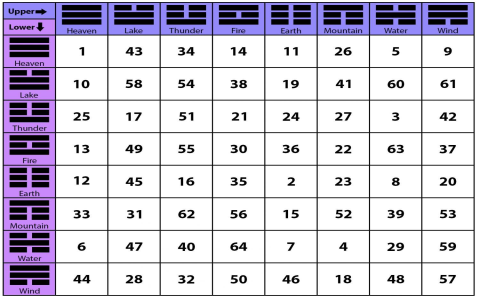
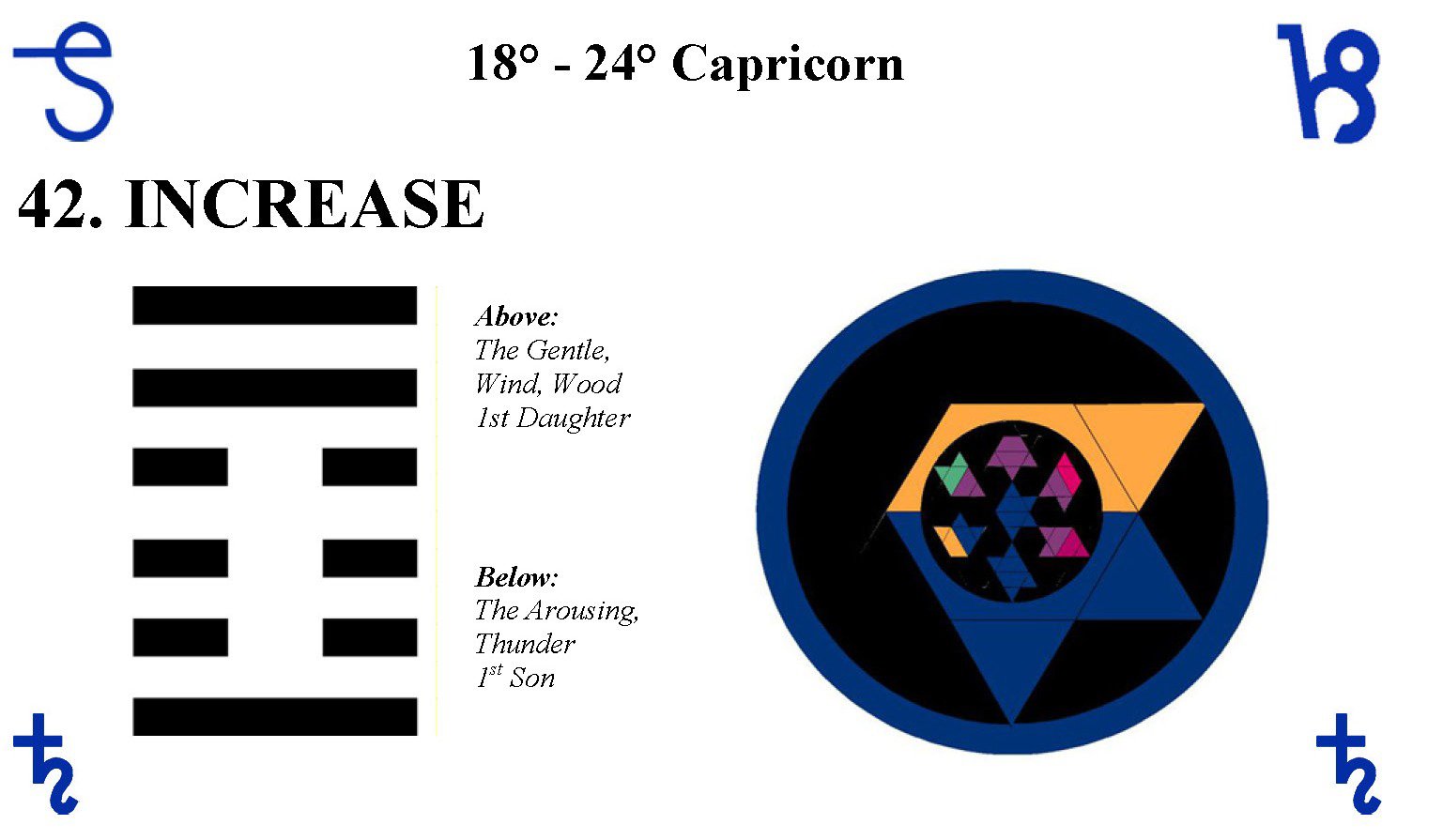
The resulting hexagram was 42, Yi (Increase). The initial structure was the Wind over Thunder. The first look at the Judgment section confirmed my initial thought—it talked about benefit, undertaking something, and utilizing great rivers. The text felt empowering, but still vague. My internal monologue was, “Okay, great, I need to increase. But how?”
This is where the changing lines came in. My final set of lines were: Line 1 (Changing Yang), Line 2 (Solid Yang), Line 3 (Solid Yang), Line 4 (Solid Yang), Line 5 (Changing Yin), and Line 6 (Solid Yang).
I spent the next hour cross-referencing the specific text for the changing lines. This is the real meat of the reading for a beginner—the lines tell you the action steps.
The text for my Line 1 (the changing Yang, moving to Yin) was about “great increase, no blame.” It suggested putting great value into initiating something new, focusing on the foundation. But the key was Line 5, the changing Yin, which moves to Yang. This line spoke about being “sincerely kind-hearted,” doing good deeds without seeking praise, and receiving increase from the highest source.
I slammed the book shut and just stared at the wall. The meaning suddenly crystallized. My problem wasn’t a lack of effort; it was the selfishness in the effort. I was working solely for my own “increase”—my financial gain, my reputation. Hexagram 42 wasn’t telling me to get rich; it was telling me to be generous. It was a cosmic push toward altruism, suggesting that the true way to increase is to focus entirely on increasing the value for others, giving without expectation.
The Practical Implementation and Realization
This reading forced an immediate change in my perspective. The next day, I didn’t worry about the sales numbers on the project. Instead, I took the most valuable parts of my work and released them for free. I wrote a massive, detailed article explaining exactly how I built the initial framework, giving away the core structure that I’d been planning to charge for.
The result? Within 72 hours, the article went viral. I received hundreds of messages thanking me for the free information. My follower count exploded, and the goodwill I generated far surpassed any small income I would have made trying to sell the basic framework. The project didn’t just ‘increase’ financially; it increased its reach and its relevance because I shifted my motivation from getting to giving.
Hexagram 42’s true meaning? It’s a mirror. It shows you that if you want the universe to reward you, you first have to figure out how to be the reward for the people around you. It’s an instruction manual for becoming a source of increase, not just seeking it. I never would have figured that out just by staring at the ancient symbols. I had to practice it, record the steps, and then execute the action the reading demanded. That’s the real beginner’s guide right there.