
The Day the Three-Card Spread Failed Me
I swear, if one more reading told me “The Past is influencing the Present,” I was going to throw my deck right into the nearest river. Look, I’m all for keeping things simple, but sometimes life just doesn’t cooperate. About six months ago, I was completely paralyzed. It wasn’t just one problem; it was this giant knot of three different issues—a tricky career change, a messy friend dynamic, and whether or not I should finally move out of this tiny apartment.
I kept pulling three cards, trying to force clarity. I used every variation: Situation-Obstacle-Advice, Mind-Body-Spirit, even the classic Past-Present-Future. Every time, the cards were just yelling at each other, not me. One card would say “take a risk,” the next would say “stay grounded,” and the third would just flash something confusing about old family habits. It bugged me so much because I knew the deck had the answers; I just wasn’t asking the right questions.
I realized my problem wasn’t the cards; it was the spread itself. Three slots couldn’t hold the weight of three overlapping crises. I needed to break down the problem into distinct, non-overlapping categories. I needed structure. I literally sat down with a cheap notebook and drew six blank spaces and decided I wouldn’t move until I had assigned them solid, separate definitions that made sense for a huge, complicated life decision.
Building My Own Six-Position Blueprint
I figured if I was going to manage this massive chunk of life chaos, I had to separate the internal stuff from the external pressures, and then separate the short-term actions from the long-term results. The standard five-card spread felt awkward, and ten felt like overkill. Six felt right—a perfect pair of triples.
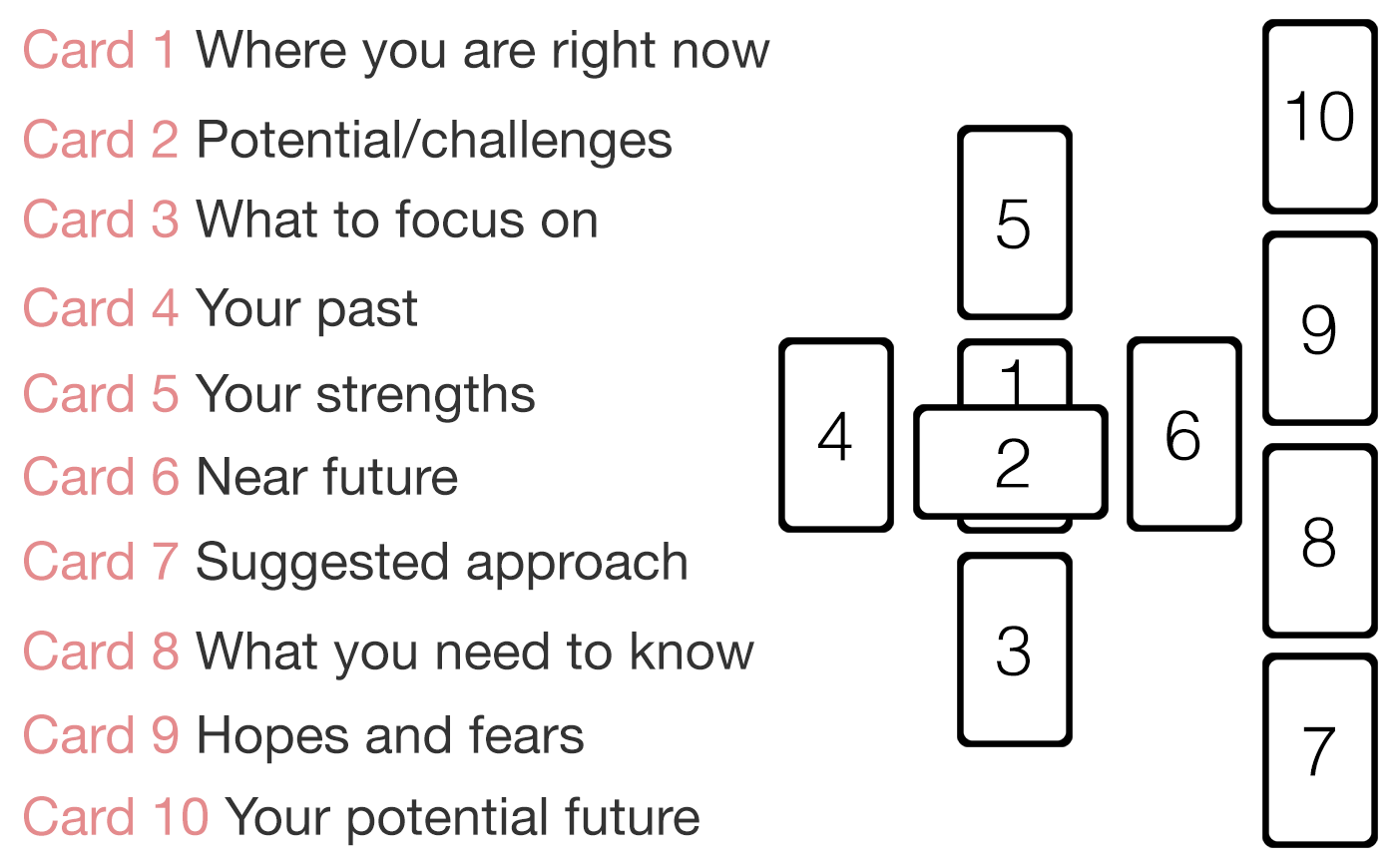
I started pulling cards again, placing them on my six marked spots, but this time, the positions had specific jobs. I didn’t want vague concepts; I wanted practical instructions. This wasn’t a spiritual journey spread; this was a “get-off-the-couch-and-make-a-decision” spread. This is how I hammered out the positions, and this is what they came to mean in my practice:
- Position 1: The Core Self (Internal Blockage).
This isn’t just about how I feel today. This is the stubborn, deep-seated fear or belief that is truly stopping me. When I pulled a card here, I knew it was pointing directly at my own BS, the mental hurdles I put up. It’s the part of me that doesn’t want to change.
- Position 2: Immediate External Pressure (The Noise).
This is everything outside my control right now. Think other people’s opinions, financial burdens, or deadlines. It’s the stuff that makes me feel rushed or obligated. I needed to see this clearly so I could filter it out if necessary.
- Position 3: Unacknowledged Resource (The Hidden Help).
This became my favorite spot. It shows me what skill, person, or opportunity I’m ignoring. It’s the piece of the puzzle I already have but haven’t used. It’s always something practical I can grab onto.
That was the first triple, dealing with the root causes and current environment. Then came the action plan:
- Position 4: The Next Practical Step (What to Do Today).
This is the immediate, low-hanging fruit. No big life goals here, just the single, concrete action I can take right now to get the ball rolling. This cuts through the procrastination.
- Position 5: The Expected Short-Term Outcome (If I Followed Position 4).
What happens in the next week or month if I actually do the thing in Position 4? This gives me a little boost of motivation, showing me the direct reward of taking that first step.
- Position 6: The Long-Term Environment (The Horizon).
This isn’t the final answer, but what the environment will look like in 6-12 months if I keep working through the core problem. It shows the energy or atmosphere I’m building towards. It helped me visualize if the struggle was actually worth the resulting stability or chaos.
The Payoff: Clarity From Chaos
Once I defined those six roles, the entire process changed. The cards stopped shouting and started having a conversation. For my massive apartment/career/friend drama, the clarity was immediate.
In Position 1 (Internal Blockage), I pulled a major card indicating emotional withdrawal. Boom. It wasn’t the external job hunt that was the issue; it was my fear of rejection making me not even send out the resumes. Position 4 (Next Step) was crystal clear: just update the LinkedIn profile. Don’t apply yet, just update the profile. Easy. Position 6 (The Horizon) showed incredible stability, which instantly made me feel like the effort was worth it.
This whole process of structuring the six positions forced me to be honest about what I was looking at. I wasn’t just performing a reading; I was running a diagnostic test on my own life. I documented every single step, recording the exact question, the positions, and the cards I drew in that notebook. Without that framework, without forcing myself to break the problem into those six distinct slots, I would still be sitting on my hands, paralyzed by the complexity. Now, for any major life decision, this six-card layout is the first thing I pull out. It just works for those times when a quick glance won’t cut it, and you need the full, rough breakdown.