
Man, sometimes life just throws so much at you, doesn’t it? You wake up, and your brain’s already buzzing with a thousand things – what to do at work, what the wife wants, what the kids need, that nagging feeling about the bills. It was a real mess inside my head for a long time. I was just constantly spinning my wheels, feeling like I was making decisions on pure gut instinct, and half the time, that gut instinct was just stress talking.
I heard about the I Ching a while back, probably from some documentary or an old book I stumbled on. Sounded pretty out there, honestly. Like ancient magic, fortune-telling, all that stuff. And usually, I’m not really into that kind of thing. But I was at a point where I just needed something. Anything to help me slow down and get a clearer bead on things, even if it was just for the small, everyday stuff. So, I figured, what’s the harm in trying?
My first attempts were a joke, really. I found some basic info online, grabbed three old coins, and just tossed them. I had no idea what I was doing. I’d get a bunch of lines, then try to match it to a hexagram, then read a whole page of cryptic ancient text. My eyes would glaze over. I’d end up more confused than when I started, staring at some profound-sounding advice about “the Creative power of Heaven” or “Thunder over the Mountain.” I was just trying to figure out if I should bother calling back that annoying sales guy! It was too much, too deep, too philosophical for my messy, everyday brain. I almost gave up, thinking it was just not for me.
But then, I had this thought: what if I could make this thing simple? Like, really, truly simple. No deep dives, no philosophical treatises, just a quick, clear nudge. And that’s when I stripped it all down to my own personal “5-point plan” for daily guidance. It wasn’t about getting detailed predictions; it was about getting a different angle, a tiny whisper of wisdom for my daily grind. Here’s what I started doing, and it changed everything:
- First, I’d frame a super simple question. Not “What is the meaning of my existence?” but more like “What’s the best way to approach X meeting today?” or “Should I tackle Y chore first or Z?” Just something direct about my immediate day.
- Second, I’d just toss the coins. Three pennies, six times. Easy. I stopped worrying about yarrow stalks or complex rituals. Just flip ’em.
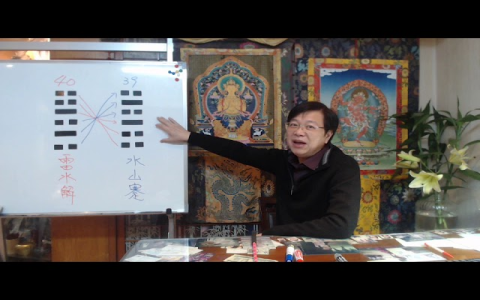
- Third, I’d identify just the main hexagram. I stopped bothering with moving lines, future hexagrams, or anything like that. Just the core, static hexagram.
- Fourth, I’d look up just the most basic, general meaning or image of that hexagram. I’d search for “I Ching hexagram [number] simple meaning” and just read the first sentence or two. I wouldn’t let myself get bogged down in the deep commentary. I was looking for the bare bones.
- Fifth, and this was crucial, I’d pick out just one, single, simple piece of advice or an observation from that basic meaning. Like, “Be patient,” “Watch your words,” “Look inward,” “Connect with others.” Just one actionable thought to carry through my morning.
That became my daily ritual. Every morning, usually right after I finished my coffee, before the chaos of the day properly kicked in, I’d grab my coins. I’d hold them, think about what was on my mind – sometimes it was work, sometimes family, sometimes just my own scattered thoughts. I remember one morning, I was wrestling with whether to really push hard on a negotiation that day. I tossed the coins, got a hexagram that, in its simplest form, was about “waiting patiently.” Man, that wasn’t what I wanted to hear. I wanted to hear “Charge ahead, big risks!” But that little nudge to slow down, to observe, to not rush it, actually made me step back. I didn’t push as hard, listened more, and the deal actually played out better than if I had barreled in. It made me realize it wasn’t about telling me what to do, but giving me a different perspective.
Another time, I felt really disconnected from my family after a busy week. My question was about how to reconnect. The simple guidance I pulled was about “seeking joy in shared moments.” It sounds obvious, right? But in my head, I was thinking about big gestures. That simple sentence reminded me to just play a board game with the kids, or make dinner with my wife. Small stuff, but it made a big difference.
Now, it wasn’t always a perfect fit. Sometimes I’d get a piece of advice that felt totally off the mark for what I was asking. Or it just sounded too vague. But even then, just the act of slowing down, asking a question, and getting any response made me think. It forced me to consider things from an angle I might not have. It became less about getting a definitive answer and more about prompting self-reflection. The consistency was key. Even when I felt like it was garbage, I kept at it, telling myself it was just a few minutes of my day.
And slowly, over time, I started to feel less scattered. Those small nudges, that daily pause, they added up. I felt more intentional with my decisions, even the tiny ones. It wasn’t like suddenly all my problems vanished, no way. But I felt like I had a little compass, a way to check in with myself and get a simple, uncomplicated prompt. It wasn’t about some grand, mystical revelation every morning. It was just about getting enough clarity to take the next simple step, without all the noise.
Now, it’s just part of my routine. Like brushing my teeth or making coffee. It’s not some deep, heavy commitment. It’s just five minutes, three coins, one simple question, and one simple bit of advice. Just enough to get me started, grounded, and ready to face whatever the day throws at me, with a little less static in my head.