Man, so I got into the I Ching a while back, right? Like, not in a super academic way, more like when life throws you a curveball and you’re just scrambling for some kind of map. I’d heard bits and pieces, folks talking about its wisdom, but it always felt a bit too… ancient for me. Then, a few years back, things at home, and honestly, with myself, just felt completely out of whack. I was feeling scattered, trying to be everything to everyone, and not really getting anywhere. My buddy, old Mike, he saw me struggling, and he just hands me this worn-out I Ching book one day. “Just flip to 37,” he says, “and sit with it for a bit.”
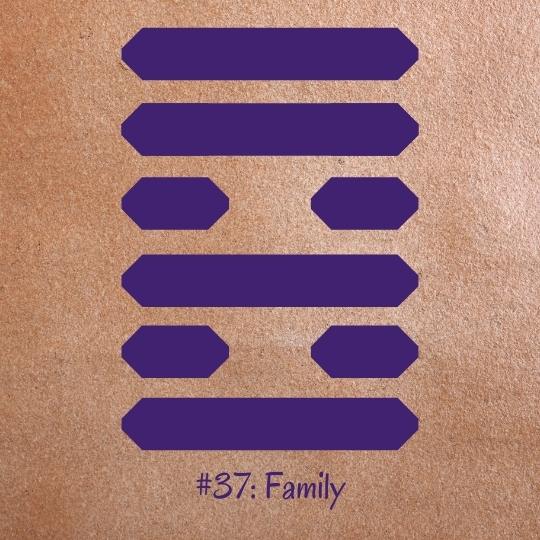
I took it home and, honestly, it sat on my nightstand for a week. I’d glance at it, this old, thick book. Finally, one rainy afternoon, I just grabbed it. I found hexagram 37. The title was something like “The Family” or “The Clan.” My first thought was, “Great, more advice on family dynamics when my own house feels like a battleground.” But I decided to actually read it, not just skim. I started digging in, line by line, trying to pull out what it was actually trying to tell me.
The first thing that really hit me was the idea of structure and roles within a family or a group. It talked about how everyone has a place, and when everyone understands and takes responsibility for their role, things just work better. Now, I’m a pretty laid-back guy, always hated strict rules, but suddenly, this idea clicked. I looked at my own life. I was trying to manage everything, but I wasn’t clear about my role, or what I expected from others, or even what others expected from me. It was just a messy free-for-all, and I was perpetually exhausted.
I started small. I literally sat down and thought about my own household. What was I actually responsible for? What did my wife handle? What about the kids, even the little stuff? We’d always just done things ad-hoc, which usually meant I’d end up doing a lot, then feeling resentful. So, my first practical step was just to clarify our roles. Not in a bossy way, just a simple conversation. I remember saying to my wife, “Hey, I’ve been reading this weird old book, and it got me thinking. Maybe if we were clearer about who does what, things would feel less chaotic?” We actually made a simple list, like, who takes out the trash, who plans dinner, who helps with homework. It sounds so basic, but it was a massive shift.
Then, the I Ching talked a lot about self-discipline and leading by example. This one stung a bit, because I knew I wasn’t always walking the talk. I wanted the kids to be neat, but my own desk was a disaster. I wanted promptness, but I was often running late myself. So, I started consciously trying to fix my own messy habits. It wasn’t about perfection, but about making an effort. If I wanted the kids to put their shoes away, I made sure mine were never left in the middle of the hallway. If I wanted them to be calm, I tried to stay calmer myself, especially during those inevitable evening meltdowns.
Building Inner Order from Outer Clarity
The hexagram also has these two core parts – the “Wind” or “Wood” inside, and the “Fire” outside. I interpreted this as inner truth and outer clarity. It meant that my internal state, my integrity, had to align with what I was showing on the outside. If I was internally grumbling about my responsibilities, but pretending to be fine, that lack of alignment was causing friction. So, I started being more honest with myself about what I could realistically take on, and what I needed help with. This helped me to actually speak up and ask for help, rather than just silently stewing.
My daily routine started shifting. I began to dedicate a small amount of time each morning to just sit quietly, sometimes reflecting on the hexagram’s lines, sometimes just thinking about the day ahead and how I could approach my roles with more intention. I started to notice that when I was clear internally about my boundaries and my purpose for the day, my interactions with my family were much smoother. The constant nagging started to lessen because I wasn’t just reacting anymore; I was acting with a bit more thought behind it.
Another big lesson from hexagram 37 was about firmness mixed with kindness. It’s not about being a tyrant, but about establishing clear boundaries and upholding them, but always with affection and understanding. This was huge with the kids. Before, it was either super lenient or explosive anger when I hit my breaking point. Learning to set those clear expectations, and then consistently, but gently, enforcing them, changed the whole vibe of our house. It felt less like a power struggle and more like a shared understanding.
It wasn’t an overnight fix, not by a long shot. I tripped up plenty of times. There were days I reverted to my old ways, throwing my hands up and just letting things slide. But each time, I’d remember that feeling of being out of sync, and I’d go back to that old book, back to hexagram 37. It became my little anchor. I didn’t just read it; I really worked it into my daily grind. I found myself thinking, “Okay, what would The Family say about this?” It helped me to reflect before reacting, to think about the long-term health of my “clan,” even if that clan was just me and my immediate household. It taught me that personal growth often starts with putting your own house in order, literally and figuratively.