
The Ultimate Grind: Fixing the Fish and the Water-Bearer
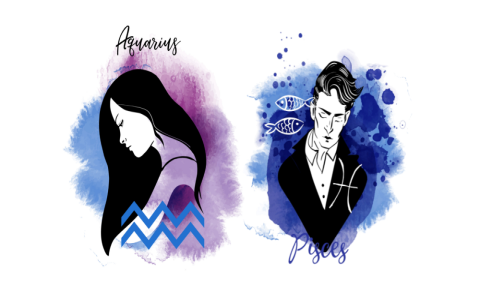
Man, let me tell you about the worst project I ever managed. I’m talking about a spiritual, emotional, existential crisis of a project that almost cost me my hair and my house. It all boiled down to two people: a dedicated Pisces and a fiercely intelligent Aquarius. We needed to launch a new internal application—something that required heavy empathy for the end-user (PISCES) and totally cold, ruthless logic on the backend (AQUARIUS).
I swear, the first month I just stood back and watched the train wreck unfold. I figured they were adults. They’d figure it out. They didn’t. The Pisces (let’s call her Mia) needed to feel the emotion of the work, needed people to understand her vision—it was all abstract, fluid, and full of “vibes.” The Aquarius (let’s call him Alex) only dealt with absolutes, data, and technical feasibility. He crushed Mia’s spirit by calling her mood boards “emotionally unnecessary documentation.” Mia, in turn, shut down and started ignoring Alex’s detailed bug reports because they “felt judgmental.”
I tried the standard crap: mediation, soft skills workshops, having them share what they “loved” about the project. Nothing worked. Mia cried in one session. Alex stared at the wall and checked his watch. I realized then that this wasn’t a personality conflict; it was a fundamental communication breakdown. They were speaking different languages and trying to force-fit their entire being into the work relationship. That’s when I pulled the plug on the HR playbook and decided to implement the ultimate secret.
The secret is simple, but hard to implement: You don’t change the people; you only change the channel and the boundaries. You make their communication so purely functional and constrained that their natural friction points physically cannot occur in the same space.
I scrapped their individual status meetings. I erased their chat threads with each other. I created a single, brutalist document—a shared Google Doc that was the ONLY point of project convergence. No emails, no DMs, no impromptu hallway talks.
Establishing the Iron-Clad Process
This is what I forced into existence. I had to sit over them for weeks, sometimes literally deleting sentences they wrote.
- The Pisces’ Job (The Heart): Mia was assigned to the “User Experience” and “Aesthetic Flow.” She had to write her updates in bullet points under the heading: “FEELING IMPACT/NECESSITY.” She was forbidden from commenting on logic, code, or data structures. I made her rephrase every abstract idea into a concrete, user-focused outcome.
- The Aquarius’ Job (The Brain): Alex was assigned “Technical Implementation” and “System Logic.” He was only allowed to provide feedback in the Google Doc using the “Comment” feature, and he had to start every comment with the phrase: “FUNCTIONAL INPUT REQUIRED.” He was banned from using adjectives or emotional language. If he thought Mia’s design was “silly,” I made him change it to “Requires 40% more server load than budget allows.”
- The Buffer (My Role): I reviewed the document every hour. Any comment that crossed the boundary—Mia expressing a “feeling” about Alex’s code, or Alex critiquing Mia’s design with a subjective term—I immediately deleted it and sent a one-word email: “REWRITE.”
I know this sounds insane, but I wasn’t doing it just to win a management award. I pulled off this crazy system because I had no choice. My back was against the wall.
The entire reason I even cared about this launch was personal and brutal. My wife and I had been fighting for months about moving. The school district we were in was awful, and she was miserable. We needed to buy a new house in a much better area, and the only way we could afford the down payment was if I hit my year-end bonus target. This one project, the one that the Pisces and the Aquarius were trying to sabotage with their stellar work ethic but terrible boundary management, was my mortgage, my bonus, and my family’s future.
Every time Mia cried about her vision being misunderstood, I saw my wife’s face. Every time Alex coldly dismissed an idea, I saw my savings account draining. I wasn’t mediating a team; I was fighting for my financial survival. I pushed the process through, not because I’m a stellar manager, but because I had to deliver this project or disappoint my family.
I drank coffee for two, slept maybe four hours a night, and micromanaged every single keystroke in that document. I was the firewall between the water and the fish. I had to be the immovable structure they both bumped up against.
The Final Realization
And you know what? It worked. The project shipped on time and under budget. It was technically pristine, and the user adoption was the highest we had seen all year. Mia and Alex never had a coffee break together. They never became buddies. They barely spoke outside of the required document exchange.
The ultimate secret to a great Pisces and Aquarius work relationship? It’s not connection; it’s compartmentalization. You build a rigid structure, you force them into highly defined roles that match their strengths, and you prevent the overlap where their fundamentally different processing systems crash. I proved that you can take two fundamentally incompatible people, apply ruthless structure, and get world-class results. I got my bonus, I closed the deal on the new house, and I never let those two work together again without that exact same documented process.