
Man, you ever get something stuck in your head, like a little nagging thought? For me, for the longest time, it was these damn Pisces dates. Everyone’s got an idea, right? February something to March something. But what’s the real deal? I mean, really, what are the actual start and end months? I always thought I knew, or at least, I thought it was simple. Turns out, not so much.
It all started last year when my buddy, Mark, had a big birthday coming up. He’s always been into that star sign stuff, you know? And I wanted to make him something special, something really personal, tied to his birth chart. I figured, “Easy peasy, I’ll just look up Pisces dates, slap it on the gift, and boom, done.” Oh, how naive I was.
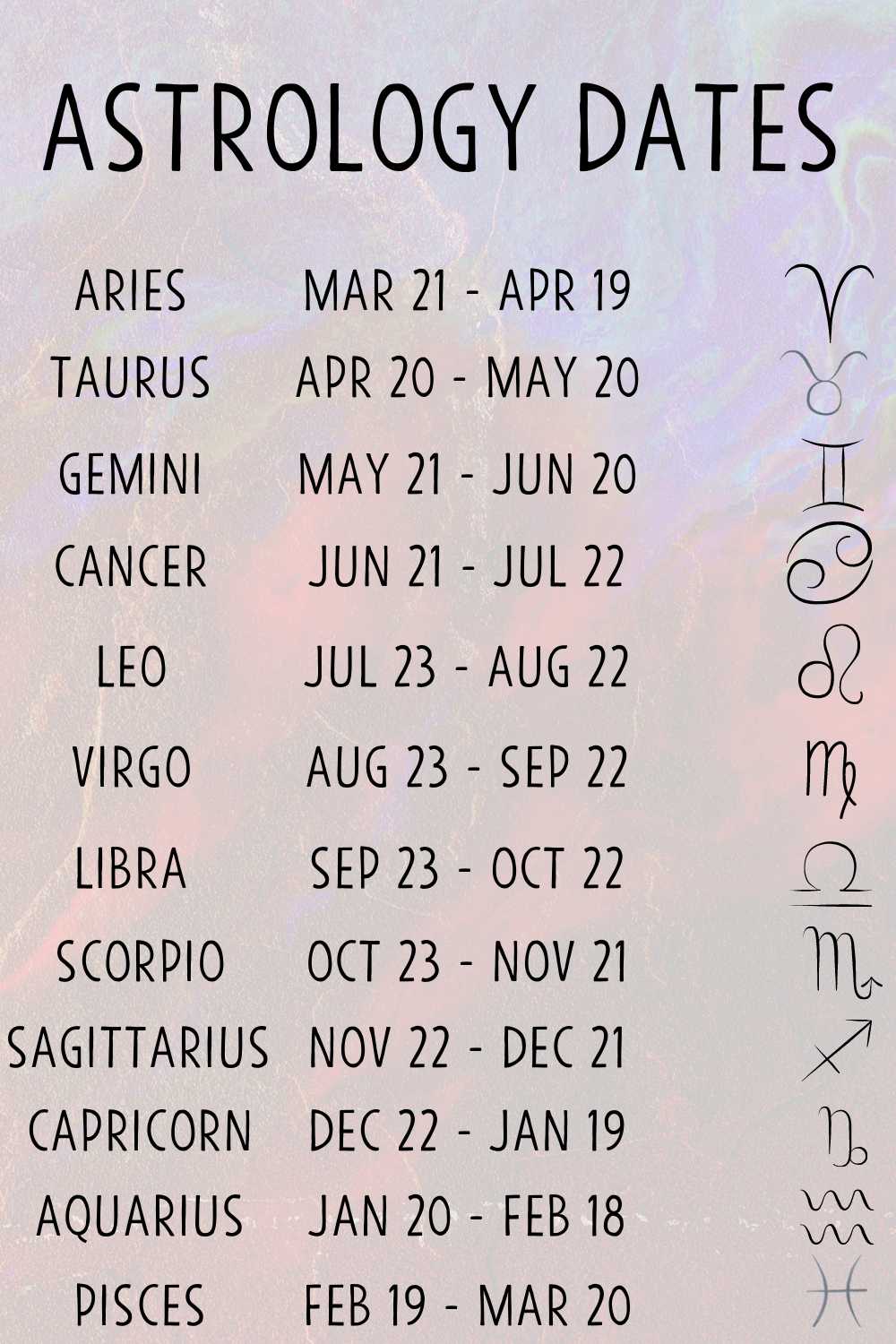
I started with a quick search online, you know, just punching “Pisces dates” into the search bar. Expected to see one clear answer, right? Nope. First site said February 19th to March 20th. Okay, seems legit. Then I clicked another, and it said February 20th to March 20th. What the heck? That’s a whole day difference. My brow started to furrow. Then a third one popped up, and it was like, February 18th to March 19th! My head started spinning. I thought astrology was supposed to be, like, ancient and fixed. How could there be so many different answers for something so basic?
This wasn’t just some casual thing for me. I was making this gift, see? A really detailed, hand-drawn chart with all the planets and houses and stuff. If I got the basic sign wrong, the whole thing would be off. It would feel like a cheap knock-off, and Mark, being Mark, would probably call me out on it in a second. So, I dug in. I wasn’t just going to pick one and hope for the best. I needed to know the real deal.
The Deep Dive: My Frustrating Quest for Truth
My first thought was, “Okay, maybe it’s a regional thing?” Like how some places say ‘soda’ and others say ‘pop.’ But that felt too simple for something tied to the stars. I started opening like, twenty different tabs, comparing what each one said. I saw terms like “tropical astrology” and “sidereal astrology” pop up. My eyes glazed over a bit at first. I was just trying to find a simple date range, not get a PhD in astronomy!
But the more I read, the more I realized it wasn’t just a simple calendar flip. It’s about the sun’s position. And that, my friends, is where things get messy. See, what I learned is that the sun doesn’t just switch signs on a perfectly clean, midnight-to-midnight schedule on the exact same date every single year. It’s like, the sun enters a particular “sign” or “house” at a specific moment. And that moment can shift by a few hours, or even a full day, from one year to the next.
Think about it like daylight saving time, but for the zodiac. It’s not always the same precise second. So, someone born on, say, February 19th at 10 AM might be an Aquarius, but someone born on February 19th at 3 PM that same year, the sun having just crossed the line, could be a Pisces. And then the next year, it might shift entirely, so February 19th could be a Pisces all day long. This was a total mind-blower for me. It meant those fixed dates you see everywhere are just general guidelines, averages, really.
I started looking for charts that showed the exact ingress dates and times for the sun entering Pisces for recent years. I found some really technical-looking tables, called ephemerides, which are basically astronomical almanacs. I mean, my head was spinning. All these numbers and degrees. But I forced myself to pore over them. I wanted to see the proof with my own eyes.
What I saw confirmed my growing suspicion: it really does jump around a bit. For some years, the sun would cross into Pisces on February 18th in the evening. Other years, it wouldn’t happen until February 19th in the afternoon. And the end date, when it switches to Aries, did the same thing with March 19th and 20th.
The Realization: It’s All About Precision (and a Little Guesswork)
So, what was the big takeaway for my friend Mark’s gift? Well, I realized that if you want to be truly, absolutely accurate, you can’t just slap a general date range on it. You need to know the person’s exact birth date, yes, but also their exact birth time, and even their birth location. That’s what astrologers use to calculate a precise chart. Without that, you’re always working with an approximation.
For Mark, his birthday was right smack in the middle, so he was definitely a Pisces. But if he’d been born on one of those cusp days, February 18th or 19th, or March 19th or 20th, I would have had to ask him for his birth time to be sure. I mean, I love the guy, but I wasn’t about to make his custom gift some kind of generic guess. It had to be right.
What this whole journey taught me is that those simple-looking questions often hide a bunch of complexity. You think you know something, but when you actually dig into it, you find layers. It’s not just “Pisces is Feb 19 – Mar 20.” It’s “Pisces starts when the sun enters the 330-degree mark of the tropical zodiac, and that happens at a slightly different time each year, usually between late February 18th and early February 20th, and then ends between late March 19th and early March 21st, depending on the year, the exact time, and where you’re standing on the planet.” Yeah, try fitting that on a greeting card.
So, the next time someone asks me about “real” zodiac dates, I don’t just rattle off a date range. I tell ’em, “It’s tricky, buddy. If you’re on the edge, you better find out your exact birth time. Otherwise, you’re just guessing like the rest of us.”