You know, life has a funny way of teaching you lessons, sometimes dragging you kicking and screaming through them. We often talk about letting go, but actually doing it? That’s a whole different ballgame. For a long time, I was caught in this trap, holding on so tight to things I thought defined me, things I believed were my security, but they were actually pulling me down. It felt like I was standing guard over my pile of stuff, eyes darting everywhere, afraid to move, afraid to lose even a tiny bit.
The Grip of the “Just In Case”
I remember one stretch, about six or seven years back, when I was absolutely convinced that my worth was tied to this one particular side project. It was a small online store selling handmade leather goods, something I’d poured years into developing. I loved the craft, sure, but the business side of it had turned into a monster. Every spare moment, every spare dollar, it all went into this thing. I was constantly checking sales figures, stressing about inventory, trying to keep up with trends, and frankly, I was miserable.
I had this idea in my head that this store was my “fallback plan,” my “creative outlet that could pay the bills.” It represented security to me. If my main gig ever went south, this would be there. If I ever wanted to be my own boss, this was my foot in the door. I told myself I couldn’t just abandon all that effort, all that investment. I had a little workshop in the garage, overflowing with leather scraps, tools I rarely used anymore, and unsold products collecting dust. Every time I looked at it, I felt a mix of pride, exhaustion, and guilt.
My wife, bless her heart, would gently suggest, “Maybe it’s okay to just take a break?” Or, “Is this really bringing you joy anymore?” But I’d always brush it off. “No, no, I just need to push through this patch. It’ll pick up. I just need to hold on.” I was literally clutching onto this idea, this identity as a “leather artisan entrepreneur,” even when it was sucking the life out of me.
The Big Shove
The turning point wasn’t some grand epiphany, not really. It was more like a slow, painful erosion, finally culminating in a harsh reality check. My main job, the one actually paying the bills, suddenly changed its structure. They needed more of my time, more commitment. It meant my evenings and weekends, which I usually dedicated to the store, were now completely gone. Poof. Just like that.
Initially, I panicked. How could I keep the store going? I tried to squeeze in an hour here, an hour there, running on fumes. I was burnt out, snapping at the kids, barely sleeping. One night, I was sitting in that messy workshop, surrounded by all my “security,” and I just broke down. I wasn’t making money, I was losing sleep, and I was losing myself. The very thing I thought was protecting me was now actively destroying my peace.
It hit me like a ton of bricks: this wasn’t security; it was a cage I had built for myself. I was so afraid of letting go of the potential, the sunk cost, the “what ifs,” that I couldn’t see how much it was actively costing me in real time – my health, my family time, my sanity.
The Unclenching
Making the decision to shut it down was terrifying. It felt like admitting defeat, like throwing away years of work. I remember the knot in my stomach. But once I actually said it out loud to my wife, “I’m closing the store,” it was like a tiny crack appeared in the wall I’d built around myself, and a little bit of light started to stream in.
The process itself was liberating. I had a huge sale, clearing out all the inventory. I gifted some of my tools to a younger enthusiast. I cleaned out the workshop, donating leather scraps to a local art class. Each item that left felt like a small release, a deep breath. It wasn’t about the money I made from the sale; it was about the space I created, both physically and mentally.
Initially, there was a void. That feeling of “What do I do now with all this free time?” And a lingering sense of failure, for a bit. But that void quickly filled with other things: more walks with my family, picking up an old book club, simply sitting and doing nothing without guilt. I started sleeping better. My focus at my main job sharpened. The constant low-level hum of anxiety I hadn’t even realized was there, started to fade.
I learned that true security isn’t about how much you hold onto, but about how gracefully you can adapt and let go when something is no longer serving you. It’s about trusting that when you create space, better things, things that truly align with you, will come into it.
Why I Know This
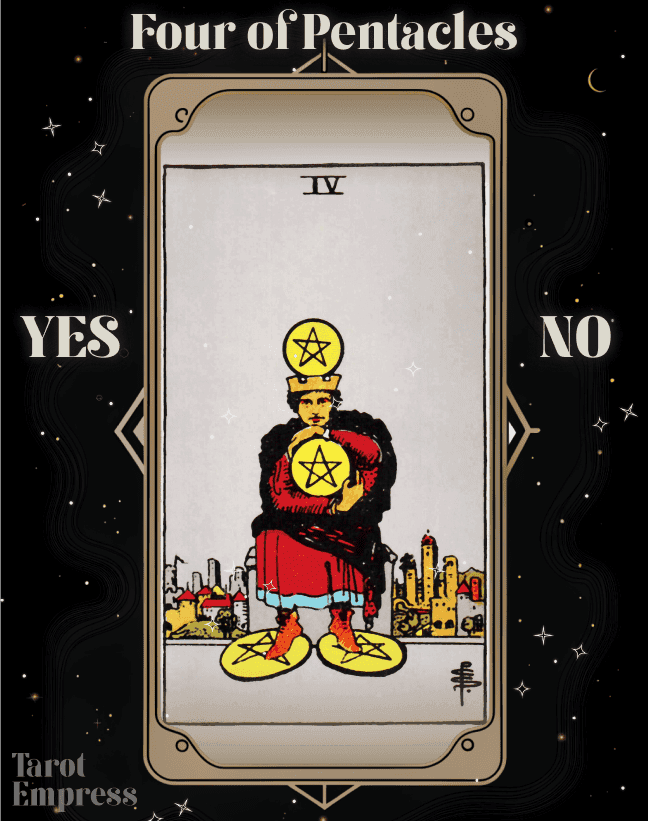
The whole experience with that store, my unwavering grip on it, and the eventual, painful but necessary release, opened my eyes in a big way. It was a few months after I finally cleared everything out that I stumbled across some old books on personal growth and symbolism that a friend had given me years ago. I was just idly flipping through them, looking for something to read during my newfound free evenings, and there it was. A description of the “Four of Pentacles.” It talked about holding onto possessions, resources, or even ideas, sometimes to the point of isolation and stagnancy. It pictured someone clutching their coins, afraid to let any go, rigid and unmoving.
It wasn’t just a card or a concept; it was a perfect mirror of what I had been doing for years. That side project, which I thought was securing my future, was actually freezing me in place, costing me more than just money. My attachment to it was so strong, so tied to my identity and fear of insecurity, that I refused to see the clear signs. That card, that image, that whole idea of holding on too tight? I didn’t just read about it; I lived it, breathed it, and finally, thank goodness, broke free from it.