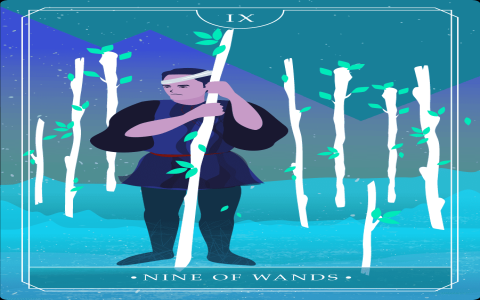
Everybody talks about the Nine of Wands like it’s some motivational poster: “Keep going! You’re almost there!” But let me tell you, when this thing shows up in the “Advice” position, it feels more like a threat than a promise. It’s the card you pull when you’re already completely fried, standing guard over a pile of burnt-out scraps, wondering why the hell you didn’t quit three weeks ago.
My own practice with this card isn’t usually some quiet morning ritual over tea. It pops up when the stakes are real and I’m ready to torch everything I’ve built just to get some damn sleep. The last time I seriously encountered the Nine of Wands as straight-up advice, I was elbow-deep in the most toxic, soul-sucking project of my freelance career. We’re talking about a six-month website build that had gone sideways faster than a greased weasel.
The Setup: Ready to Walk Out
I had been grinding for months. I poured everything into this project. Late nights, skipping weekends, drinking too much bad coffee. The goal was to launch a massive new e-commerce platform for a client who, frankly, seemed to get a kick out of moving the goalposts. Every time I hit a milestone, he’d slide in with some new, enormous demand. “Can we integrate this complex third-party API?” “Oh, by the way, we need a complete redesign of the checkout flow.” Stuff that doubled the work but the contract didn’t cover. I felt like the guy in the card—wounded, leaning on my staff, with all the other Wands stacked up behind me like a defensive wall, exhausted and waiting for the next blow.
I hit my limit one Tuesday at 2 AM. He sent a seven-page email with “minor revisions” that amounted to starting over. I seriously considered drafting a reply that just said, “I quit. Keep the deposit. Go hire someone else to clean up your mess.” That’s when I forced myself to walk away from the computer and grab my deck. I needed an answer, and I needed it fast, before I did something I regretted.
The Practice: Pulling the Card and Facing the Truth
I didn’t do any fancy spreads. I just grabbed the deck, shuffled until my hand hurt, and laid out three cards: The Conflict, The Hidden Fear, and The Advice.
- The Conflict: The Ten of Swords. Total burnout. Betrayal. Endings. Yep, that felt right.
- The Hidden Fear: The Four of Swords. The fear of rest, the fear of stopping the fight, of being paralyzed. Also spot-on. I was scared if I quit, I’d look like a failure.
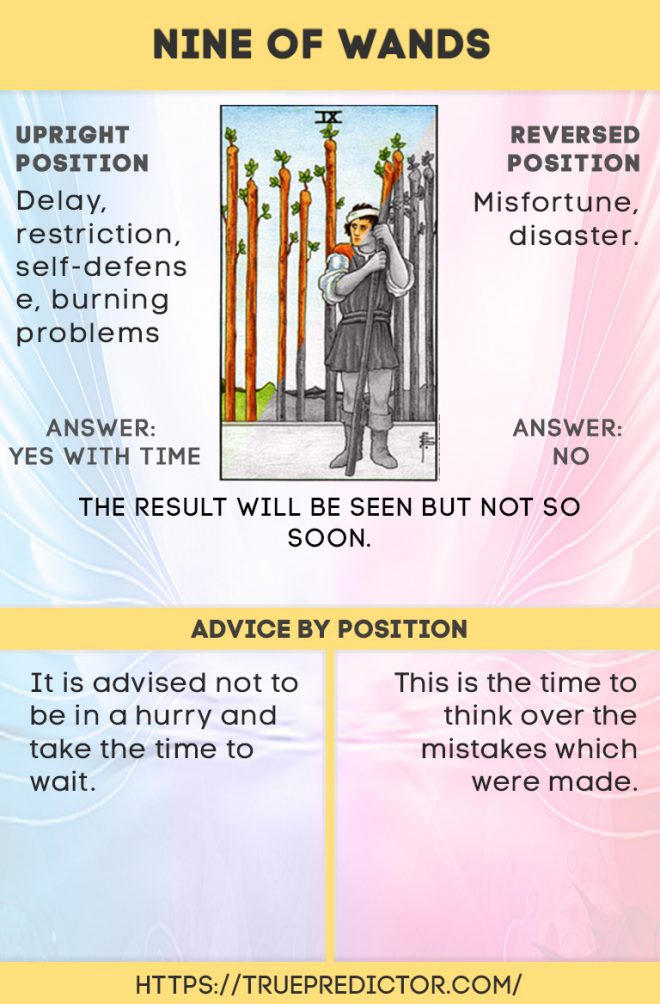
- The Advice: The Nine of Wands.
I physically slumped back in my chair. I didn’t want this guy. I wanted the King of Pentacles telling me to demand more money, or maybe the High Priestess telling me to trust my gut and bail. The Nine of Wands was telling me to stay put. It felt like the universe was telling me to keep eating the crap sandwich. I took a photo of the card spread, logged the time, and just sat with the image for a solid twenty minutes.
I started writing down the card’s energy, translating its cryptic picture into plain English, real-world instruction:
This Card’s Advice Translation:
-
Stop whining: You have the structure built. The fight isn’t about building anymore; it’s about holding the line.
-
Defend the boundary: You built this defensive wall (the Wands). Now use it. Stop letting people knock it down.
-
One more push: Look behind you. You have done 90% of the work. This last 10% is where everyone breaks. If you quit now, you wasted everything you just fought for.
The card wasn’t telling me to quit, and it wasn’t telling me to bend. It was telling me to be stubborn. It was telling me to stop being a passive victim of the client’s demands and to become the guy in the picture—beat up, yes, but ready to smash the next thing that tries to breach the perimeter.
The Follow-Through and The Win (Sort of)
I followed the advice. I logged back in, but this time, my response was different. I didn’t quit. I didn’t complain. I pushed my wall forward.
I wrote a curt, professional email detailing exactly what the remaining deliverables would be, based on the original contract, and stated flat-out that any new demands (the seven pages of “minor revisions”) would require a contract amendment and an immediate, non-refundable deposit that was 50% higher than my usual rate. I knew it was a risk. I was forcing a confrontation, leaning on my staff and daring him to make the final move.
The client went ballistic. He called and screamed, listing everything he thought I owed him. My only response, over and over again, was the Nine of Wands translated: “I will complete the original scope. Everything else is a new project.” I just stood there, mentally defending my perimeter until he realized I wasn’t going to budge.
Guess what happened? He backed down. He canceled some of the revisions, paid the remaining balance for the original work, and we launched the site. I walked away with my fee, having sacrificed a little bit of sanity but keeping my dignity and the payment. I didn’t get any extra money for the stress, but I didn’t lose the whole project either. That’s the real advice of the Nine of Wands: it’s not always a happy ending where you skip off into the sunset. It’s a grim, painful win where you pull yourself together one last time and refuse to be taken down, even when you’d rather just drop the staff and go home. That feeling of successfully defending your boundary? That’s the whole point.