Man, sometimes your brain just feels like a tangled mess of old Christmas lights, doesn’t it? That was pretty much my state of mind a few months back. I was sitting on this big decision for a project, tossing and turning, drowning in options, and frankly, just plain stuck. Every angle I looked at it from, I saw more complications, more potential pitfalls. It was paralyzing. I’d talk to folks, read articles, try to whiteboard it out, but everything just added more noise to an already chaotic headspace.
Stumbling onto the King of Swords
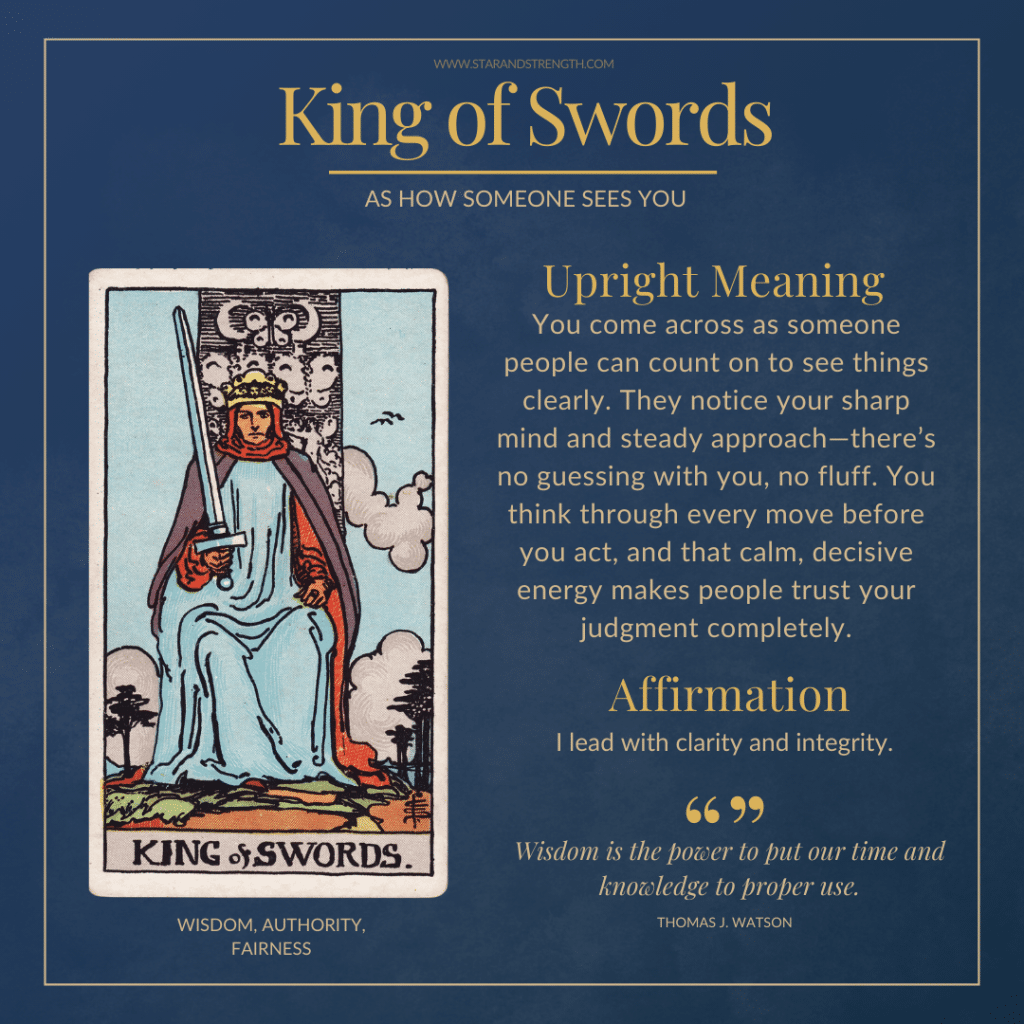
One evening, just scrolling through some random stuff online, I bumped into something about tarot, specifically the King of Swords. Now, I’m not really into that whole mystical thing, but the description of this card, even in a quick blurb, just hit me differently. It talked about clarity, objective truth, cutting through illusion, and decisive action based on intellect, not emotion. It was like a light went on. Not some magical, woo-woo light, but a practical one, a way to think about how I should be approaching this problem.
I started thinking about it not as a card, but as an archetype, a mindset. This “King of Swords” guy, he wasn’t about feelings or guesses. He was about the cold, hard facts. Logic. Strategy. And man, was I lacking that in my current situation. I was all over the place with hypotheticals and what-ifs. I realized I was letting my emotions about potential failure, or even just the sheer effort of making a choice, cloud everything.
My Personal “Sword-Sharpening” Process
So, I decided to consciously adopt this “King of Swords” approach. I wasn’t pulling out any cards; I was pulling out a pen and paper and telling myself to get brutally honest and clear. Here’s how I went about it:
- First, I Banned Emotions. Seriously, I made a rule. No “I feel like this might happen,” or “I’m worried about that.” It was strictly about “What is?” and “What can be objectively proven?” This was tough, let me tell you. My gut instinct usually screams pretty loud, but I made myself put it on mute.
- Then, I Collected Raw Data. I stopped asking people for opinions and started asking for numbers, reports, case studies, or clear explanations of processes. If it wasn’t measurable or verifiable, it didn’t make the cut. For my project decision, this meant looking at budget sheets, past performance metrics, available resources, and clear timelines.
- I Dismantled the Problem. Instead of looking at the whole gigantic decision, I broke it down into smaller, manageable chunks. What were the core components? What was the actual goal? Sometimes we get lost in the weeds because we haven’t even defined the real target. I forced myself to write down the absolute minimum requirement for success.
- I Played Devil’s Advocate, Hard. For each option I had, I didn’t just list the good stuff. I actively sought out every single flaw, every potential drawback, every way it could go sideways. And I didn’t sugarcoat it. I pretended I was debating with someone who wanted to tear my idea apart. This helped me prepare for actual challenges and see weaknesses I’d conveniently ignored before.
- I Communicated My Thoughts… to Myself. I wrote out my arguments for and against each path in plain, no-bullshit language. I imagined explaining it to someone who knew nothing about the project, stripping away all insider jargon. This act of simplification helped me spot where my logic was fuzzy or incomplete.
The Payoff: Cutting Through the Noise
The whole process felt pretty clinical, almost cold, at first. But as I kept doing it, a funny thing happened. The mental fog started lifting. The anxiety around the decision didn’t vanish completely, but it certainly quieted down. I wasn’t just thinking about the options anymore; I was analyzing them. I was using my brain like a sharp instrument, dissecting the problem instead of just staring at it.
By the time I finished, I didn’t feel like I was making a choice based on a hunch or on what others expected. I felt like I had genuinely understood the situation, the risks, and the most logical path forward. The decision I eventually made wasn’t necessarily the “easiest” one, or even the one I initially leaned towards emotionally, but it felt incredibly sound. It was backed by objective data and clear reasoning, and that gave me a confidence I hadn’t had for weeks.
This experience really hammered home that sometimes, to get true clarity, you have to be willing to be tough. Tough on your own assumptions, tough on your feelings, and tough on the information you allow into your decision-making process. The “King of Swords” for me became a reminder that pure, unadulterated logic, wielded like a sharp sword, can slice through even the most confusing situations and bring you to a place of crystal-clear understanding.