
Man, life throws you curveballs, doesn’t it? Sometimes you just hit a wall, feel completely out of whack, and wonder how you ended up there. That’s exactly where I found myself a few years back. Everything just felt… off. Not a disaster, mind you, but like a constant low hum of discord, mostly at home. My kids were hitting those teenage years, full of angst and big opinions, and my partner and I seemed to be talking past each other more than with each other. It wasn’t a huge fight every day, but more like a thousand little snags, pulling at the fabric of things. Every conversation felt like walking on eggshells, every decision a potential landmine. I was drained, truly drained, just wanting some damn peace.
I remember one particularly rough evening. The kids were bickering over something trivial, the TV was blaring, and I was just sitting there, feeling this tightness in my chest. I thought, “This can’t be it. This isn’t how it should be.” I’d always been the one to smooth things over, to find the middle ground, but I was just tired of trying. That night, after everyone else had gone to bed, I found myself pacing around the living room, feeling utterly helpless. I needed a sign, a guide, something to cut through the noise and tell me what the hell to do.
That’s when my eyes landed on an old, worn-out book on a dusty shelf. It was my grandfather’s copy of the I Ching, a gift he’d given me years ago, saying it was “a map for life.” I’d dabbled with it once or twice, mostly out of curiosity, but never really leaned on it. But that night, I felt a pull. I just needed to hear something, anything, beyond my own jumbled thoughts. I grabbed it, sat down, and without even thinking much about the coin tossing, I just sort of… opened it, almost intuitively. I wasn’t looking for a specific answer, just guidance on how to get things back in harmony. How to make things flow again. How to find that damn peace.
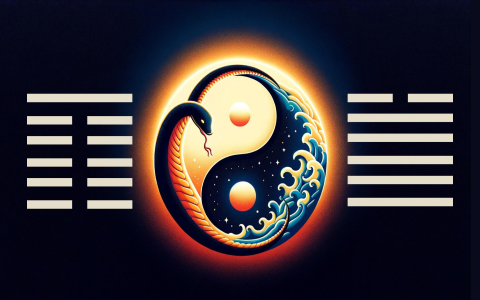
And there it was. Hexagram 11. “T’ai,” it read. Peace. Harmony. Success. My eyes just kind of latched onto those words. I started reading the interpretation, slowly, letting the old, slightly strange language sink in. It talked about “Heaven and Earth in Union.” It described a time when “the small goes forth, the great comes back,” signifying good fortune. It was about things connecting, aligning, flowing easily. The hexagram itself looked like heaven was below earth, which seemed upside down to me at first. But the book explained it: the active, creative force of heaven descending and meeting the receptive, nurturing force of earth, bringing everything into balance and growth. It was like a well-spring pushing up, a fertile field.
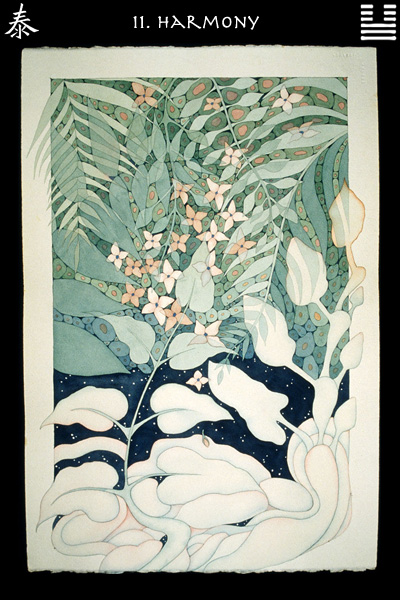
At first, it felt a bit abstract, you know? “Heaven and Earth in Union.” How does that fix my kids yelling about screen time or my partner and I having silent dinners? But as I kept reading, what really hit me was the idea of “the small going forth, the great coming back.” I interpreted that as letting go of the petty stuff, the ego battles, the need to be “right” all the time. The “small” things that were causing so much friction. And letting the “great” come back – the bigger picture, the love, the shared purpose, the harmony that I knew was buried underneath all the current mess.
So, I started trying it out. It wasn’t some magic switch, believe me. It was a conscious effort, every single day. When a disagreement would flare up, my first instinct used to be to jump in, mediate, or even take sides. But after reading Hexagram 11, I started to just… observe. Let the “small” arguments run their course, without adding my own fuel. Not ignoring them, but not getting entangled in the trivial details. When my partner and I would have one of those awkward silences, instead of brooding or waiting for them to speak first, I’d try to initiate, gently, about something positive. I focused on acts of kindness, small gestures that said, “I value our connection,” rather than getting stuck on who was “right” or “wrong” in the last argument.
I started giving the kids more space, trusting them to work things out, even when it was messy. And when they did come to me, instead of offering immediate solutions or critiques, I just listened. Really listened. It felt like I was actively trying to reverse the flow, bringing the “great” – the understanding, the patience, the underlying love – back into the center. It meant holding my tongue when I wanted to snap, offering a hug when I wanted to argue, and finding common ground instead of drawing lines in the sand.
And you know what? Slowly, gradually, things started to shift. It wasn’t overnight. There were still bumps, for sure. But the frequency of the discord lessened. The intensity softened. The constant hum of tension started to dissipate. My kids, sensing less pressure from me to “fix” everything, began to find their own compromises more readily. My conversations with my partner became more genuine, less about grievances and more about shared dreams and simple daily things. We started laughing more, too, which was a huge relief.
It was like I had been trying to force things, pushing against the natural current, and Hexagram 11 told me to just step back, adjust my own flow, and trust that things would align. It truly became my guide. It showed me that harmony isn’t about everything being perfect or silent; it’s about the conscious effort to let the minor conflicts go forth and allow the greater good, the deeper connections, to come back and settle in. It taught me how to find my own harmony, and in doing so, brought it back into my home.