Man, let me tell you about last year. I thought I was gonna lose a friendship that was older than my mortgage. Thirty years, buddy. Thirty years of shared stupidity, and all of a sudden, we were just staring across the table like we spoke different languages. Total opposition, you know? Like we were standing on the same spot but looking in opposite directions.
It started over a stupid business thing, a small investment in some broken-down property down south. We both put money in, we both had ideas. His idea was slow and safe. Mine was fast and aggressive. Neither was bad, but trying to merge them was like trying to mix oil and cement. Every call turned into a shouting match. Every email was just passive-aggressive garbage. We were doing the classic thing: arguing about the solution when we couldn’t even agree on what the damn problem was anymore.
The Mess of Total Opposition
I remember sitting there one Tuesday night, staring at my wall. I’d been awake for 48 hours straight, not because I was working, but because I was just replaying these stupid arguments in my head. I was trying to figure out the perfect logical response, the one sequence of words that would finally make him see reason. I tried spreadsheets. I tried legal-sounding letters. I even tried getting a mutual friend to mediate. All that did was turn two guys fighting into three guys mad at each other.
- I tried being ultra-polite. Made him angrier.
- I tried being firm and business-like. Made me look like a jerk.
- I tried ignoring him for a week. He sent a registered letter.
It was a total disaster. Everything I did pushed him further away. I felt like I was trapped in a mirror maze, always seeing him but never able to reach him without running into glass.
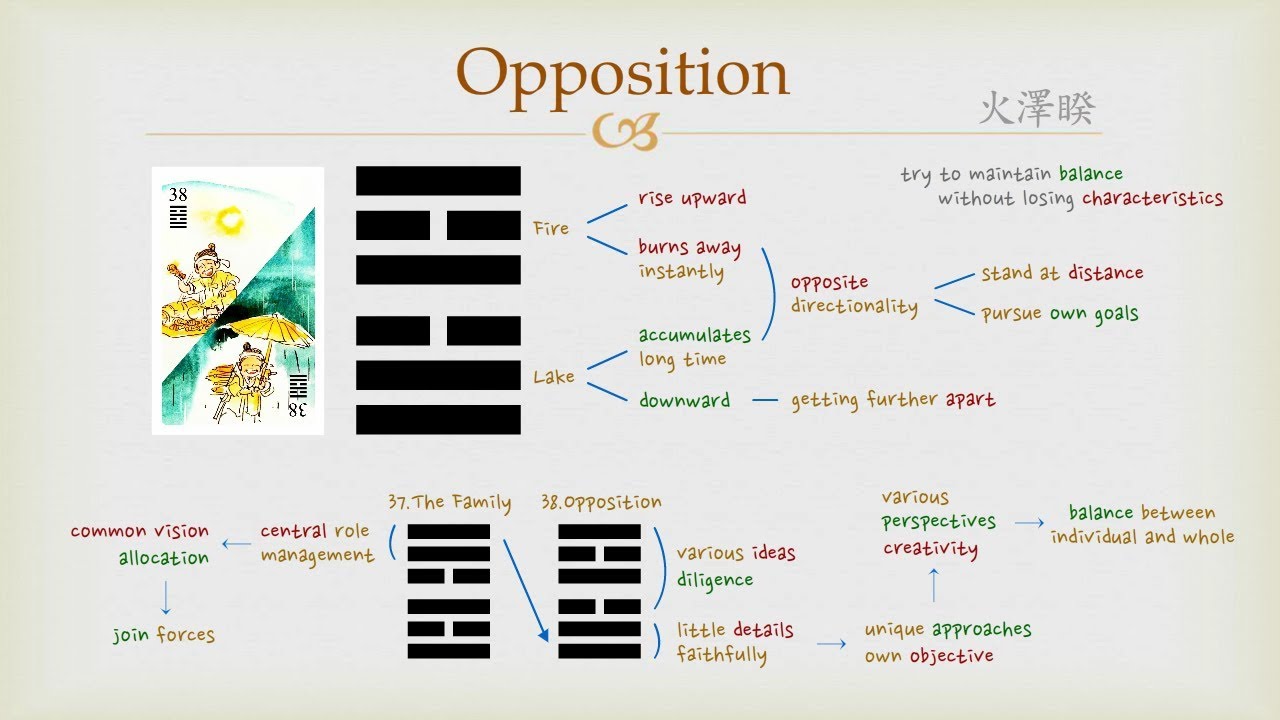
I was cleaning out the attic one day—you know, trying to stay busy so I wouldn’t call him and start another argument—and I came across this old book my grandpa left me. Just some weird, dusty Chinese thing. I opened it up, not even reading it, just flipping through the pages, and I saw these lines. Like broken sticks and solid sticks. I didn’t know what the hell they meant. I saw this specific pattern. Hexagram 38. Kui. Opposition. I wrote down the number just because it felt like a sign. I looked it up later on my phone. Didn’t read the fancy commentary, just the basic feel of the thing: misunderstanding, separated, looking at the same thing but seeing different worlds.
That really hit me. It wasn’t about the money anymore. It was just pure, stupid opposition.
My One Simple Move That Fixed It
So I thought, if everything I do makes it worse, what if I just… stop doing things? Not ignoring him and sending registered letters, but literally just putting the whole situation down. I had been trying to win a fight. The I Ching didn’t tell me what to say. It just showed me the shape of the mess I was already in.
I picked up the phone. I didn’t call him to argue. I called him, and when he picked up, I just said three things. That was the whole plan.
“Look, I’m done. I’m out of the whole thing. I don’t want the property, I don’t want the money, I don’t want to talk about it for a month. You handle it. Do whatever you think is best. Call me back in four weeks, and we’ll talk about something else. Anything else.”
And I hung up. No negotiation. No dramatic pause. I just dropped the rope.
For four weeks, absolute silence. It was hard, man. I kept wanting to text him some smart-aleck comment. But I forced myself to just leave it alone. I didn’t check the property news. I didn’t ask the mutual friend. I just stopped caring about winning and started caring about not fighting. It felt like walking away from a really bad car wreck. The tension was gone.
When he called me back, exactly four weeks later, he didn’t talk about the property. He talked about his kid’s baseball game. I talked about my stupid DIY deck project. It was like no time had passed. The conflict? He handled it. Sold the thing for less than we wanted, but he sorted the paperwork, and he sent me the check. No drama. He even apologized for being a knucklehead. I apologized too. We never actually solved the original argument, but we fixed the friendship. That’s what matters.
I know this works because I used to be the biggest hothead on the planet. I only learned this whole “just stop talking” move after I lost the job that mattered most to me. This was way back when I was a younger guy. I got into a shouting match with the CEO over a tiny coding mistake—me, a junior guy, yelling at the big boss. I thought I was defending my honor or some garbage. I was fired on the spot. No severance. Nothing.
I walked around for six months just stewing in my own pride. I spent all that time trying to draft the perfect legal letter, the perfect email to HR, the perfect, logical argument that would prove I was right. All it did was keep me unemployed and miserable. I was stuck in my own personal Hexagram 38 loop, fighting a shadow. It wasn’t until I gave up the fight entirely and got a totally different job—a simple, manual labor gig that didn’t require me to talk to anyone important—that things cleared up. That simple, physical act of doing something else, far away from the source of the conflict, was the only thing that let me finally see that the argument was never worth the job.
So yeah. See conflict? That simple step? Stop talking. Stop doing. Walk away. Let the whole rotten thing cool down. You don’t have to win every argument to save what matters.