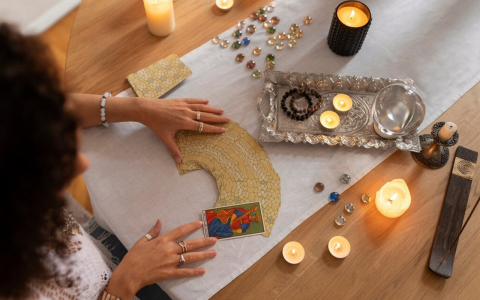
Man, when I first picked up the Tarot deck, I thought I was hot stuff. Yeah, the Major Arcana, fine. The individual minors, okay, I memorized a few keywords. But the moment I laid out a three-card spread, or God forbid, a Celtic Cross? It was like trying to read ancient Sumerian. Nothing connected. I’d sit there, looking at a Tower next to a Six of Swords next to a Hierophant, and my brain would just short circuit. I was just reading three separate fortunes, not one cohesive story. I’d look like a fool, rattling off keywords that didn’t weave together, and the person I was reading for? They’d look at me like I was making it all up. Because, honestly, I kind of was.
I wasted money on a few online courses, thinking they held the secret key to combination reading. I bought those fancy, massive books that tell you every single possible pair-up—Tower with Sun, Sun with Lovers, Lovers with Death. What a joke. The books are useless because they don’t teach you how to think, they just give you answers. You end up reading the book more than the cards, and the book gets it wrong half the time anyway because it’s not your energy. I was ready to pack it in, seriously. I considered just selling the deck and forgetting I ever tried.
Then, I ran into this old guy, a proper crusty reader, doing roadside readings down in New Orleans. I watched him work. He wasn’t flipping through reference books, he was just talking. I finally showed him my deck and told him I was struggling with combinations. He just watched me struggle and finally just said, “Stop looking at the pictures, kid. Read the damn sentence.” That was it. That little chat led me down this rabbit hole where I hammered out what became my three go-to rules. These rules aren’t found in any book I’ve seen because they are just rough-and-ready ways I use to make the combination speak. They make the cards interact like people, not just standalone items.
Technique 1: The Grammatical Structure Hack
This is what that old reader meant by the sentence idea. I stopped calling the positions Past, Present, Future. That’s too wishy-washy and passive. Now, when I pull three cards, I assign them a basic sentence role right away. The first card is almost always the Subject, the main focus, the noun. What’s the core issue the reading is actually about? The second card becomes the Verb or the action. What is happening to the subject? What is the energy doing? And the third one? That’s the Object or the Result. What did the action result in? This makes it active instead of passive.
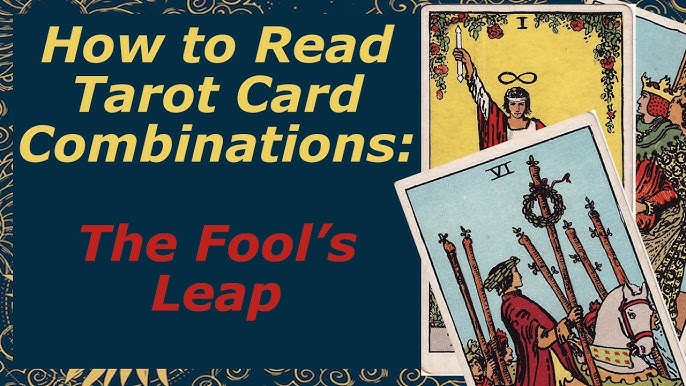
Check this layout I pulled the other day:
- Card 1 (Subject): The High Priestess (Intuition, secrets). This is the core issue—maybe something hidden or deeply internal.
- Card 2 (Verb/Action): The Eight of Swords (Feeling stuck, confinement). This is what’s being done to the subject.
- Card 3 (Object/Result): The Sun (Joy, clarity). This is the inevitable end result if the Subject and Verb are worked through.
Read that out: “Intuition (Subject) is actively making you feel stuck (Action) leading to eventual, necessary Clarity (Result).” It’s not just three separate events; it’s a narrative arc. The blockage (Eight of Swords) is actually an internal, intuitive feeling (High Priestess) that needs to be seen clearly (Sun). See? It tells an actual story about feeling blocked and then breaking through. Before, I would have just rattled off three separate meanings and confused everyone. This Grammatical Structure Hack works nearly every time for a basic, three-card layout and it takes the guesswork completely out of it.
Technique 2: The Action-Reaction Flow
I use this one for bigger spreads, like those messy seven or ten-card ones, where you have different lines or segments, and Technique 1 is too rigid. Here, you look at the flow, the momentum between two or three cards in a row. Think of it like a domino effect: one card sets up the next. I look for the Active Card and the Passive Card in a pair. Say you have the King of Wands (Active, big energy, bossy) next to the Four of Pentacles (Passive, hoarding, stuck). The combination isn’t just “bossy money guy.” It’s “The aggressive, creative energy (King) is actively causing a stagnation or holding back (Four of Pentacles).” The first card is actively doing something to the energy of the second one. If you reverse them, the meaning shifts completely. Now, the stagnation (Four of Pentacles) is slowing down or blocking the passionate action of the King of Wands. It’s a super practical way to figure out which card has the steering wheel and who is the victim in the grouping.
Technique 3: Element and Color Counting for the Vibe
This is my cheat code for when I’m tired or the cards are totally confusing and I can’t figure out the damn story. Instead of getting hung up on the tiny picture details or what a King is doing to a Four, I just step back and look at the whole spread like it’s a painting. I don’t care about the specific card at this point, just the big picture element count. I count how many of each suit hit the table.
- Too many Swords (Air): The person is stuck completely in their head. Too much thinking, no doing, just mental torture and burnout.
- Too many Wands (Fire): All talk, no action. Tons of energy and passion but no plan or strategy. They need to sit down and be quiet for five minutes.
- Too many Cups (Water): Emotional mess. They are totally swimming in feelings. No logic, everything is based on mood swings and drama.
- Too many Pentacles (Earth): Inertia. Everything is slow, practical, physical, and maybe a bit boring. Get moving, nothing is changing!
The total element count tells you the energy state of the person you’re reading for even before you look at the meanings. If the question is about love, and you pull mostly Swords and Pentacles? The problem isn’t their feelings (Cups), it’s probably their overthinking (Swords) and being too worried about the practical cost or security (Pentacles). It immediately simplifies the whole reading and you sound like a genius even when you’re just counting suits and colors. Look for the obvious imbalance and that’s often the real problem.
I used to panic when a reading didn’t make sense and it felt like a jumbled mess. Now, I run the spread through these three filters every single time, and it always clicks. The first one gives me the basic sentence. The second one gives me the flow of power and who is bossing who around. The third one tells me if they are even asking the right kind of question for their current energy level. These aren’t fancy techniques, no one taught them to me in a classroom, and they absolutely violate some of the rules I read in those expensive books. But they work because they force you to stop looking at the cards like pictures on a wall and start treating them like the words in a story. That’s the real trick. Stop memorizing keywords. Start making the damn cards talk to each other. Once I figured that out, I stopped struggling and started actually reading.