
Man, when I first started messing around with the I Ching, I thought it was all just some kind of spooky fortune-telling junk. I was stuck in a real job mess back then, trying to figure out if I should quit or just stick it out for the paycheck. I kept asking the book, but the answers were always too big, too cosmic, you know? Like, the whole hexagram reading would be about ‘The Creative’ or ‘The Clinging’ and I’d just stare at it, totally unbothered, thinking, “Yeah, great, but does that mean I should email my resignation now or what?” I was doing it all wrong.
I wasted months just reading the general judgments for the main hexagram I cast. It was useless noise, honestly. It felt like walking into a movie halfway through and trying to figure out the plot. The general picture was there, sure, but the action—the actual thing I needed to do next—was missing. That whole time, I was completely ignoring the single most important bit: the damn moving lines.
My ‘Aha!’ Moment with the Changing Lines
This is the breakthrough. I finally got hold of an old beat-up copy—not one of those fancy modern translations—and the introduction finally clicked in my head. It talked about the difference between a static reading and a dynamic reading. You don’t just ask the book; you ask the book and you track the energy that is currently shifting. Those shifting pieces are the moving lines. I realized I was supposed to be looking for the actual changes happening inside the initial hexagram.
I sat down that day and decided to try it fresh. No more trying to figure out the deep meaning of the big picture right away. I grabbed three old coins—not the special yarrow sticks, that’s too much hassle for me—and started tossing them. I tossed them six times, writing down the result of each toss from the bottom up, just like you’re supposed to.
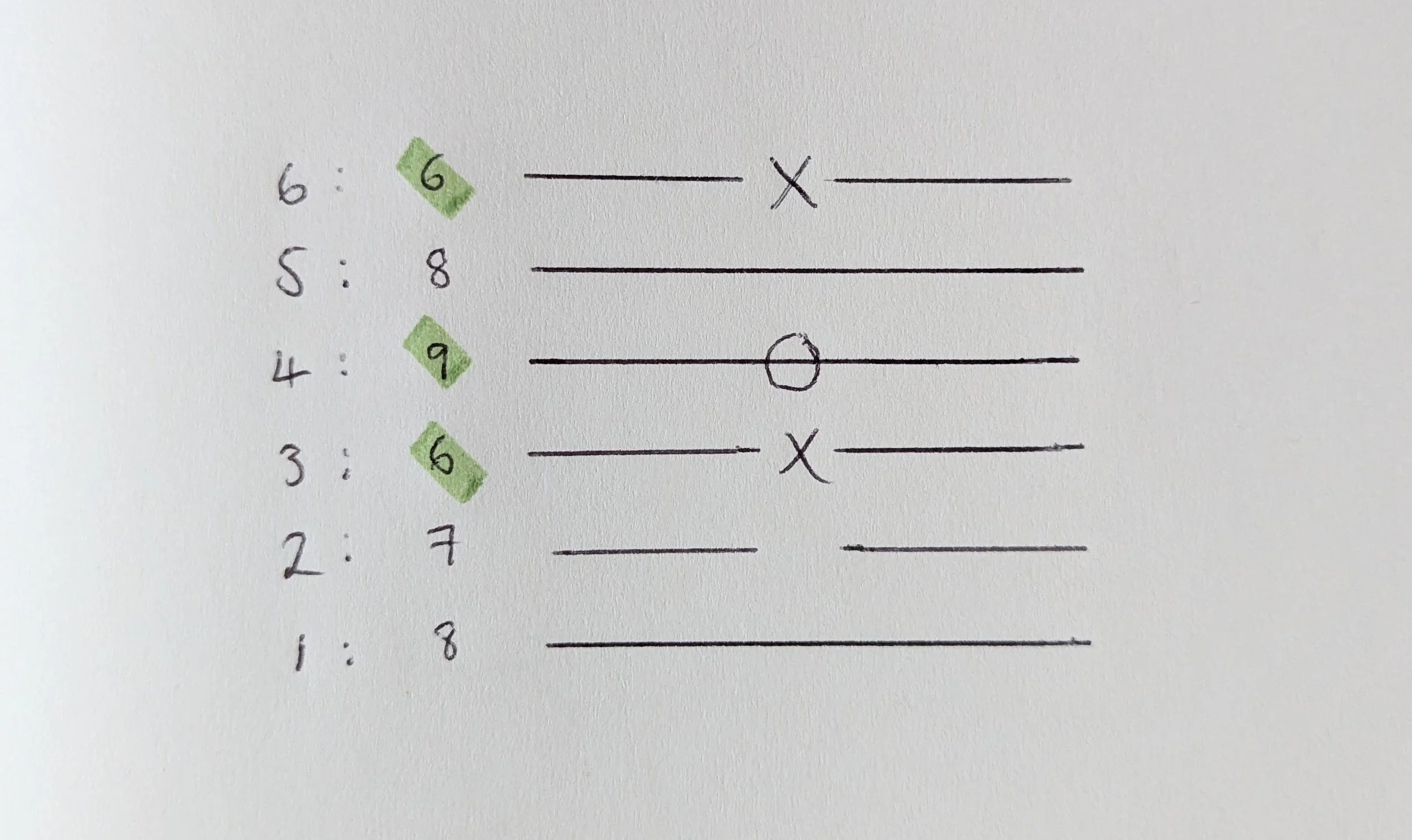
- Heads (3) are the Yang lines.
- Tails (2) are the Yin lines.
I followed the simple counting rule: Six or Nine means movement. That’s the critical part. A ‘6’ is an old Yin line that’s about to flip to Yang. A ‘9’ is an old Yang line that’s about to flip to Yin. The ‘7’s and ‘8’s? They just stay put. They are background info. The ‘6’s and ‘9’s? That’s the fire. That’s the real story.
The Simple Process That Finally Worked for Me
When you get a moving line, you have to realize you’ve got two hexagrams on your hands, not one. I started treating the initial hexagram—the one I cast—as the ‘Current Situation.’ Then I looked at the moving lines, which are the ‘Action/Advice’ lines.
Here’s how I finally figured out the sequence of interpretation for the moving lines:
First, I completely ignore the general judgment of the first hexagram and skip the second hexagram entirely. I go straight to the line text. If I cast two or three moving lines, I read the text for every single one of them. That text, the one attached to the specific line number (like “Nine at the third place” or “Six at the top”), is the real advice, the direction I need to pay attention to right now. It is direct and usually messy, like real life.
One time I asked about getting into a new business venture with a friend. I got Hexagram 37, The Family, but a moving line at the fifth place. I ignored the general talk about household rules and unity. I went straight to the line text. It said something about the king’s approach being like a spirit, and there would be good fortune, but the words were confusing. I knew that fifth line was the most important one, the position of honor. I took a deep breath, and I went for the deal. It crashed and burned about six months later. I thought the I Ching had failed me.
It didn’t. I just hadn’t completed the second, necessary step.
The second thing I learned is that those moving lines don’t just talk; they change the situation. After I read all the advice from the moving lines, I take my initial hexagram and physically flip the ‘6’s to ‘7’s (Yin to Yang) and the ‘9’s to ‘8’s (Yang to Yin). This gives you the second hexagram. This second hexagram—that’s the ‘Outcome’ or the ‘Future State.’
Going back to that failed business deal, after it went south, I pulled out that initial reading. The line text had mentioned fortune, but the resulting hexagram was Hexagram 42, Increase. The general judgment for that hexagram talked about not being overly eager and waiting for the right moment. The line text gave me the action (go forward), but the resultant hexagram gave me the context (things will increase, but requires proper timing and care). I realized too late that the growth was coming, but I rushed it, messing up the whole thing because I thought the first line reading was the end of the story.
Now, I treat the whole thing like a three-part instruction manual: First Hexagram is the starting point. Moving Lines are the specific, actionable instructions. And the Second Hexagram is where all that action is heading. If you don’t track those ‘6’s and ‘9’s and see how they twist your situation, you’re just reading poetry, not getting advice. It has to be dynamic, otherwise, why even bother tossing the coins in the first place?