The Great Career Path Meltdown and What I Dug Up
Man, let me tell you, for the longest time, I thought I was just broken. I kept landing these decent-paying jobs—marketing coordination, project management, even tried a stint in tech sales support—and every single time, I’d hit a wall. Not a competence wall, but a sheer, soul-crushing emotional wall. I’m a textbook Pisces woman; I practically weep when I see a stray cat, so trying to navigate a cutthroat corporate environment? Absolute disaster. The whole “focus on empathy and care” advice felt sweet, but I needed to know how to actually cash that check without becoming a therapist. So, I decided to treat my career history like a scientific experiment, or maybe more accurately, an autopsy of my failures.
Phase One: Mapping the Misery (The Burnout Ledger)
The first thing I did wasn’t read astrology books; it was open a damn spreadsheet. I called it the ‘Burnout Ledger.’ I listed out the last four jobs, the exact dates I started feeling that dread in my stomach, and, most importantly, the specific triggers that made me want to rage quit. I didn’t just write “bad boss.” I drilled down into the action. What did the bad boss do?
- Job A (Project Management): Triggered when I had to force compliance on a team member who was clearly dealing with personal issues. I couldn’t prioritize their human needs over the timeline. Result: Instant physical sickness.
- Job B (Tech Sales Support): Triggered when I had to deliver bad news about a product failure, knowing they couldn’t afford a fix. I felt personally responsible for their financial stress. Result: Shut down and cried in the bathroom.
- Job C (Copywriting, Agency Side): Triggered when the goal was to manipulate consumer emotion purely for profit, without any real value exchange. It felt ethically disgusting. Result: Quit without a backup plan.
After I finished that mapping, the pattern was brutally clear. My failures weren’t about skill gaps; they were about empathy overload. I was spending all my energy absorbing the pain and stress of others (clients, colleagues, even imaginary consumers) and had no mechanism to process it without sacrificing the corporate goal. I needed a path where empathy was the tool for success, not a liability.

Finding the Empathy Engine: Pivoting the Practice
I realized I needed to stop trying to fit into aggressive, results-only roles and start designing a role that used my caregiving instinct. I began actively seeking out environments that valued relationship-building over immediate transaction. This wasn’t fast; this was months of careful observation and small tests.
My big practice pivot was quantifying the positive feedback loop. I started volunteering one morning a week, specifically in a capacity where my main job was to listen and organize resource information for people going through tough times (think career transitions or new parent support). Then I compared that feeling to my current corporate desk job.
The observation I logged was shocking:
In the office, spending eight hours solving problems led to exhaustion. Volunteering for three hours, focusing purely on connecting people and showing genuine care, led to energy and clarity. I was actually getting more done at my paid job after volunteering. My empathy, when directed purely toward support, fueled me instead of draining me.
So I started re-engineering my current work activities to mimic the volunteer experience. If I had to lead a training session, I didn’t focus on the bullet points; I focused on making sure every single person in the room felt seen and understood the material’s practical application to their lives. I shifted from “data presentation” to “human connection.”
Phase Three: The Realization (The Bridge Roles)
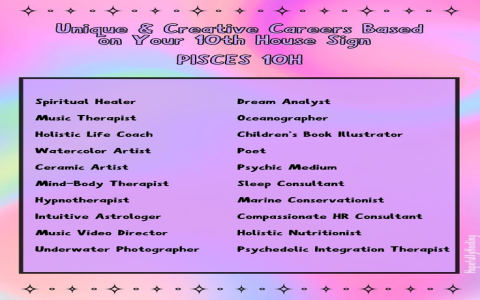
I finally sussed out the core truth: A Pisces woman focused on care doesn’t need to be a doctor or a therapist. She needs a job that acts as a bridge—a role that connects people to resources, solutions, or understanding, and she must be shielded from pure, aggressive competition.
I left my last corporate job and leapt into independent consulting and content creation focused specifically on career transition and mental wellness in the workplace. This allowed me to:
- Structure my day around deep, supportive work (coaching sessions, writing resources) rather than constant firefighting.
- Utilize my sensitivity to quickly identify the true pain points clients were hiding (the empathy tool).
- Maintain control over the ethical boundaries of my practice.
I stopped trying to sell widgets or hit abstract quarterly numbers and started selling clarity and compassion. It’s messy, sure, being self-employed is always a mess, but for the first time since I left college, the dread is gone. My entire career shift wasn’t a philosophical choice; it was a desperate, detailed, nine-month-long practice of elimination and careful testing to figure out which job duties respected my natural wiring and which ones just completely ruined me. If you’re a Pisces woman struggling, stop looking at job titles and start looking at the specific verbs in the job description. If they primarily involve forcing, competing, or manipulating, just walk away. Find the verbs that mean supporting, connecting, and nurturing.