
The Abyss Showed Up, So I Built a Raft
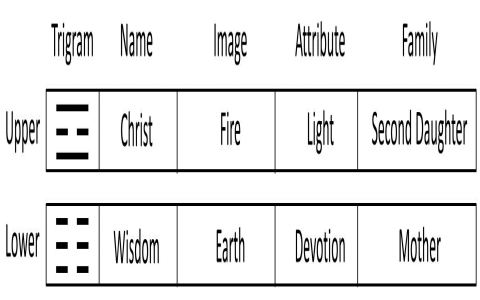
Man, I got hit with it. That Hexagram 29 feeling. That double water, double danger, repeating pit that just tells you: Good luck, pal. You’re in a deep hole.
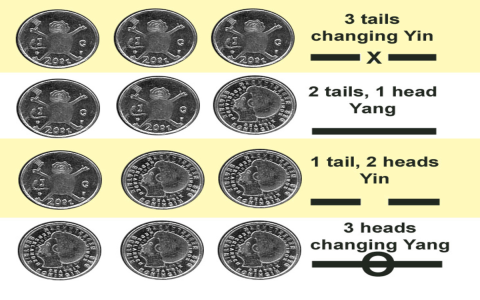
I was sitting right here at my desk, felt like maybe two weeks ago now. I had just finished the throw—simple coins, three times, keeping it real—and there it was, K’an, The Abysmal. My gut instantly tightened. I’ve been practicing this system for a long time, and I know when 29 shows up, it’s not saying, “Hey, great success tomorrow!” It’s saying, “The bridge is out.”
It came right after I checked my email and saw the notification: the big contract, the one I’d been banking on to smooth out Q4, got put on an indefinite hold. No warning, just a polite, corporate email that basically wiped out about 30% of my planned income for the next two months. Danger? You bet your butt. The car lease was due, the studio rent was looming, and that sudden hole in the income drove me nuts.
A few years ago, when something similar happened—I got a similar reading, but I ignored it and just kept pushing—I panicked. I doubled down on sales calls, started chasing every tiny lead, cut my rates, and ended up working myself sick for four times the effort and half the pay. I essentially dug the hole deeper because I was too busy flailing to acknowledge the pit I was already standing in. That experience, where I literally spent three months screaming at the sky and getting nowhere, is why this time, I decided to trust the process 100%.
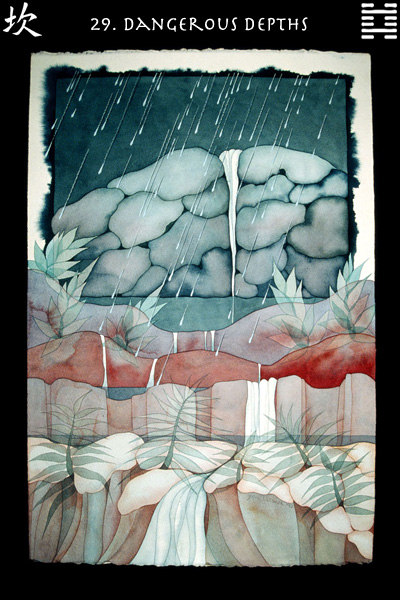
This time, I took The Abysmal seriously, not as a curse, but as a roadmap. A sign that the current path is blocked and I need to stop and build something before moving.
I boiled it down to the simplest possible moves. Three things I had to do, not just think about.
Step One: Stop All Forward Movement (Embrace the Stillness)
The core lesson of Hexagram 29 is not to struggle against the water, but to wait for the integrity of the center. When you’re in a pit, your first instinct is to climb the wall immediately, but often that just results in a mudslide. You fall harder.
- I physically powered down the machine. I closed the contract email, closed my project management software, and walked away from the desk. No immediate response to the client. No phone calls.
- I forced a 24-hour moratorium on all new income-generating activities. I didn’t even look for new leads. I figured if the world was going to end, it could wait 24 hours. This was about acknowledging the danger and halting the panic response that historically made things worse.
- I spent the first two hours doing inventory. I didn’t tally bills; I tallied what I had already finished. Completed projects, existing reliable clients, money that was already in the bank (down to the penny). This move took the focus off the theoretical loss and put it on the tangible wins.
This forced stillness was the hardest part. It felt like wasting time, but it prevented me from making an emotional, costly mistake, which is the real danger of 29.
Step Two: Locate the Inner Stream (The Center of Sincerity)
The hexagram advises that in the midst of danger, having sincerity brings a breakthrough. This isn’t about being nice; it’s about being honest about my current capability and resources. It means finding the most authentic, reliable resource I had left.
- I identified the smallest, most reliable connection I had. I picked one old client—one who always paid on time, always said thank you, and always had little projects—someone I genuinely liked working with.
- I didn’t call about money; I called about a tiny favor. I asked if I could spend two hours helping them debug a minor issue they’d mentioned a month ago, for free, just because I had the time. I framed it as me needing a mental break from a bigger, stalled project (without naming the stalled project).
- The Pivot: I was moving from chasing a huge, lost opportunity (danger) to reinforcing an existing, small, trusted connection (sincerity). I was putting my time into building good karma, not chasing dead air.
This move changed the vibe completely. It felt productive, honest, and grounded. The danger was still there, but I had successfully stepped out of the swirling eddy of panic and found a still point.
Step Three: Redirect the Flow (Turning the Abyss into an Engine)
The final step is to use the energy of the danger itself to propel the next move. The lost contract had gifted me something: about 100 hours of sudden, unexpected free time. That time was the opportunity.
- I didn’t try to replace the lost 30% income with one new project. I took the 100 free hours and dedicated them entirely to fixing a technical debt problem on my own platform that I had been procrastinating on for six months.
- I treated this internal project like it was a paid client. Full commitment, no distractions. This wasn’t about income; it was about upgrading my own internal engine so the next time a big opportunity came, I could handle it faster and better.
- The Payoff: That bug I fixed ended up saving me about 20 hours a month in manual upkeep. It was an internal efficiency gain, not external cash. But that efficiency freed up time next month, which is the opportunity.
A week later, the old client I did the two-hour favor for in Step Two called back, offering a bigger, retainer contract. Not as big as the lost one, but stable, reliable, and based entirely on the demonstrated goodwill and sincerity I put in when I was supposedly in “danger.” I had turned the abyss into a reservoir of trust and efficiency. That’s how you handle K’an, my friends. You stop, you ground, and you move sideways, not up.