
Man, sometimes you just hit a wall, right? Like, life just gets a bit… fuzzy. That’s exactly where I was. Didn’t know what was up, what was down, just felt like I was spinning my wheels. I’d heard bits and pieces about this old book, the I Ching, or the Book of Changes, from some folks way back. Always sounded a bit too mystical for my taste, honestly. But when you’re desperate, you start looking under every rock. So, one day, I just decided to dive in, headfirst.
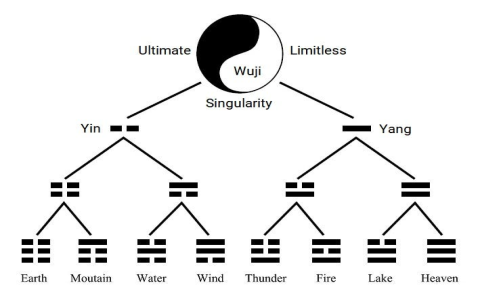
I didn’t pick up some fancy, scholarly edition. Nah, I found an old, dog-eared paperback at a used book store. It looked like it had seen some stuff. And it had these simple explanations for all these weird symbols, those hexagrams, you know? Six lines, solid or broken. Looked kinda like abstract art to me at first. But the idea was to toss some coins, get a pattern, and then look it up. Sounded simple enough, but the real trick, I figured out pretty quick, was figuring out what the heck it meant for my life.
My first few attempts were a total mess. I’d throw the coins, look at the hexagram, read the blurb, and just scratch my head. “What’s this got to do with me trying to figure out if I should take that new gig?” I’d wonder. It felt like trying to read a menu in a language I didn’t speak. But something in me just kept pushing. I decided to make it a project. I wasn’t just gonna dip my toe in; I was gonna swim the whole damn ocean of those 62 hexagrams.
Starting the Deep Dive: One by One
I cleared off a corner of my desk. Got myself a plain notebook, the kind with the cheap paper, and a couple of those bic pens. And three old pennies. That was my whole setup. My plan was simple, almost brute force: I was going to systematically go through every single hexagram, one by one. Not necessarily in order, but just making sure I touched on each one, letting them sink in.

Every morning, or sometimes late at night when things were quiet, I’d sit down. I wouldn’t just toss the coins willy-nilly. Instead, I’d pick a hexagram from the list in the book. Let’s say I started with number 1, “The Creative.” I’d then pretend I had just cast that hexagram for a situation in my life. I’d read the general meaning, then the specific lines. This wasn’t about asking a question and getting an answer anymore. This was about trying to understand the essence of each of these patterns.
I started a routine:
- I’d pick a hexagram.
- I’d read its main heading and keywords.
- Then, I’d read all the individual line statements, really trying to put myself in the shoes of someone getting that line.
- After that, I’d just write. Not summarizing what the book said, but just free-associating. What images came to mind? What past situations did it remind me of? What did it feel like?
Some days, it was a breeze. Some hexagrams just clicked immediately. Like number 11, “Peace,” or number 30, “The Clinging, Fire.” Their descriptions of harmony or clarity, or even the subtle warnings, just felt so clear, like a light bulb going off. I’d sit there, pen scratching away, filling up pages with thoughts about patience, cooperation, or when to hold back and when to push forward.
But then, oh man, then there were the others. Hexagrams like number 4, “Youthful Folly,” or number 29, “The Abysmal, Water.” Those ones just made my brain hurt. They felt dense, confusing, or just plain weird. I’d read them five times, eight times, and still feel like I was missing some huge piece of the puzzle. I’d get frustrated, close the book, and walk away for a bit. Sometimes I’d stew on them for days before something would finally shift, and a tiny glimmer of understanding would pop up. It was rarely some grand revelation; usually, it was just a small shift in perspective, like seeing a different angle on a familiar problem.
The Slow Grind and the Small Breakthroughs
I kept at it, day after day, week after week. My notebook started filling up. It was a mess of scribbles, underlines, question marks, and sudden bursts of insight. I wasn’t trying to memorize anything, just to feel it out. I wasn’t looking for predictions; I was looking for patterns, for ways to understand the ups and downs that life throws at you.
What I slowly started to realize was that these hexagrams weren’t telling me what would happen. They were painting pictures of situations and attitudes. They were showing me the forces at play, the common human struggles, the different ways things can develop. It was like getting a map, not a destination. It taught me to look at my own actions, my own stubbornness, my own fears. It peeled back layers of how I approached problems, how I dealt with people, even how I saw my own strengths and weaknesses.
By the time I’d gone through all 62 hexagrams – I never did get to all 64, always felt like two were missing from my book, hah – it wasn’t about being an expert. It was about something much deeper. I didn’t suddenly have all the answers. But I had a new way of looking at the questions. When I’d face a tricky decision, instead of getting hung up on “what’s the right answer?” I’d find myself thinking about the energy of the situation. Is this a moment for “Standing Still” (Hexagram 52) or for “Pushing Upward” (Hexagram 46)? Is this a time for caution, like “Modesty” (Hexagram 15), or for bold action?
It was like I had built up this mental library of human experience. When things got chaotic, I could often find a hexagram that perfectly described the feeling, and more importantly, offered a subtle hint at how someone, or something, might navigate it. It wasn’t about fortune-telling anymore. It was about seeing the currents, understanding the ebb and flow, and feeling a little less blind as I tried to steer my own boat through the waters of life. That old book, those simple lines, they didn’t tell me what to do, but they sure as hell helped me figure out how to think about doing it.