Alright folks, let’s talk a bit about the I Ching. I know, I know, it sounds super deep and complicated, like something for monks in a mountain temple. And yeah, it totally can be. But for us regular folks just trying to figure out what’s up with life, sometimes you just need to cut to the chase. That’s where I stumbled onto what I call the “Basic 7” for a quick read, just for when you need a fast glance at what’s bubbling.
I remember when I first bumped into this whole I Ching thing. It was a rough patch, to put it mildly. I’d just quit a job that was sucking the life out of me, without really having a plan B. My partner was giving me the side-eye every morning, wondering what the hell I was doing with my life. Money was getting tight, and the feeling of just drifting, not knowing which way was up, it was eating at me.
I tried all sorts of stuff back then. Read self-help books until my eyes blurred, went for long walks talking to myself, even tried some guided meditation – which mostly just made me fall asleep. Then a friend, bless their cotton socks, showed me an old book, all dusty and weird, saying, “Hey, try this out, it’s called the I Ching. People say it helps with decisions.”
I opened it up, and man, it was a wall of text. Hexagrams, changing lines, judgments, images, commentaries – my head was spinning. I just wanted a simple answer, a nudge, not a whole philosophy class. My brain was already fried. So, I figured, there has to be a simpler way to just get the gist, to pull out what actually matters for someone who’s not trying to become a sage overnight.
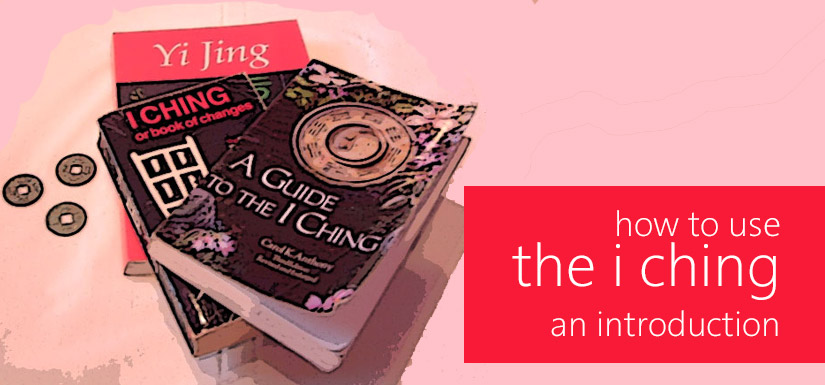
I started messing around with it, really just trying to strip away all the stuff that felt like extra noise. I wasn’t looking for deep enlightenment; I was looking for a sign, a direction, anything to stop feeling so lost. This is how I ended up with these “Basic 7” pointers for a quick run-through when you’re just looking for some fast clarity:
My Quick & Dirty I Ching Reading Process
-
First, I Grabbed My Coins and Asked One Clear Question: I’d hold three coins, usually pennies, in my hand. And then I’d just ask. Nothing fancy, no long rituals. Just, “What do I need to know about finding my next gig?” or “Should I push ahead with this idea?” It had to be a question I could answer with a yes, no, or a direction. This was crucial for keeping it simple.
-
Then, I Tossed ‘Em Six Times to Get My Hexagram: I’d toss those pennies six times, recording each throw. Two heads and a tail? That’s a ‘young yang’. Two tails and a head? ‘Young yin’. All heads or all tails? Those were the ‘changing’ ones, the powerful ones. I learned pretty quick that these changing lines were where the real action was.
-
I Pinpointed the Main Hexagram: Once I had all six lines, I drew out my main hexagram. This was the ‘current situation’ or the immediate answer. I’d scribble it down, usually just a quick sketch.
-
I Hunted for Those “Changing Lines”: I immediately scanned my six throws for any ‘all heads’ or ‘all tails’ tosses. These were my changing lines. If there were none, it meant the situation was pretty stable, and the main hexagram was the whole story.
-
If I Had Changing Lines, I Drew Out the “Changing Hexagram”: If I had changing lines, I’d flip those specific lines to their opposite. A changing yang became a yin, and a changing yin became a yang. This gave me a second hexagram, what they call the ‘changing hexagram’ or ‘resultant hexagram’. For me, this was the ‘future’ or ‘what it’s moving towards’.
-
I Ignored Most of the Book and Just Read the ‘Judgment’ for Both: This was my biggest shortcut. Instead of reading every single line commentary or the images, I just flipped to the main hexagram, found its ‘Judgment’ section, and read that. Then, if I had a changing hexagram, I’d do the same for that one. This really helped me cut through the noise. The ‘Judgment’ often gave me the gut feeling I needed.
-
Finally, I Just Sat With It: After reading the two judgments (or just one if no lines changed), I wouldn’t try to overthink it. I’d just let it sit in my head for a bit. Usually, something would click. A phrase, a word, a feeling. It wasn’t about getting a perfect, crystal-clear answer, but about getting a different angle, a new perspective on my problem.
And you know what? It worked. Not like magic, not every time, but it gave me just enough of a push when I needed it. When I was wrestling with that job decision, my initial hexagram told me something about “waiting with sincerity.” And the changing hexagram showed something about “cultivating oneself.” It wasn’t a “yes, take the job” or “no, don’t,” but it was exactly what I needed to hear: wait, reflect, work on yourself. It felt like a gentle pat on the back, a reminder to breathe.
I kept using this stripped-down method whenever I felt stuck. It didn’t solve my problems, but it sure helped me look at them from a new angle, without getting bogged down in all the academic stuff. It was just a simple way to nudge myself forward when I was feeling lost in the weeds.