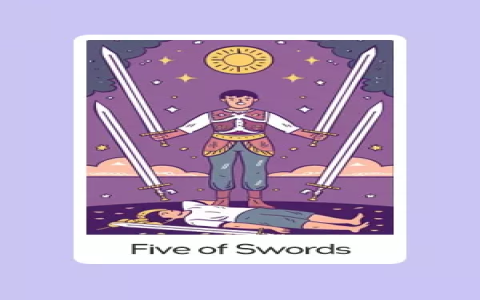
So, I pulled the Five of Swords in a recent career reading, and let me tell you, my stomach dropped a little. You know the card—the guy walking away all smug with three swords, leaving two on the ground. Looks like a win, but it feels awful. I’ve been going through a really intense period at work, a lot of low-key conflict and feeling like I’m always fighting for air, honestly.
The Setup: Why I Even Did the Reading
Things at the startup I’m at have been ridiculously chaotic. We hit a massive project wall, and instead of everyone pulling together, it turned into this weird blame game. I was leading the dev team on a core feature, and honestly, I felt like I did everything right, but when the deadline slipped, it was my head on the chopping block first. I was just drowning in meetings where I had to defend every single decision. It felt less like collaboration and more like a competitive debate show every morning.
I needed some perspective, something to tell me if I should keep pushing this boulder uphill or just pack up my laptop. That’s when I laid out the cards, simple three-card spread: Situation, Challenge, Outcome. The outcome slot? Bam. Five of Swords.
Initial Gut Reaction and The Research Dive
My first thought was, “Great, I’m going to win, but everyone will hate me.” Or maybe, “I’ll lose big time and walk away feeling humiliated.” Neither felt good, right? I immediately started hitting the books, reading every Tarot forum and blog post I could find about 5 of Swords in a professional context.
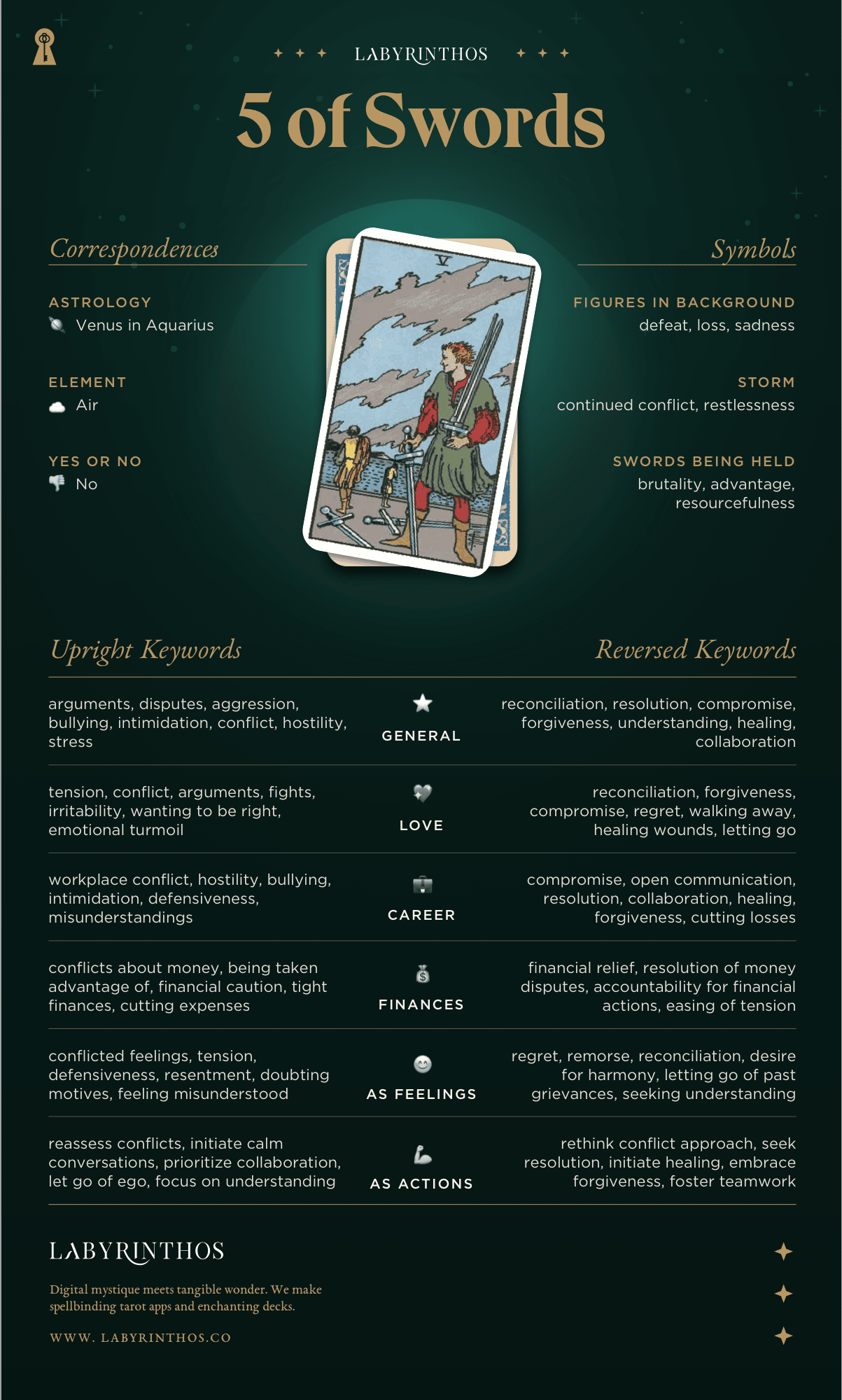
- Old School Meaning: Victory at any cost, hollow success, Pyrrhic victory. It screams conflict and loss of goodwill.
- My Situation Fit: It tracked perfectly with how I felt. I could push this feature through, meet the deadline, but I would burn so many bridges with the product team and management that the ‘win’ would feel meaningless.
I realized I was spending more time fighting against internal roadblocks than actually building the product. I was winning small skirmishes—getting my architecture approved, getting the resources allocated—but the overall war felt exhausting and utterly joyless.
Putting the Practice into Action: The Test
I decided to stop fighting for a week. I shifted my focus from aggressively defending my team’s work to simply documenting everything transparently, even the uncomfortable truths about why things were slowing down. I stopped engaging in the small, passive-aggressive email wars that were happening daily.
The shift was tactical: If the 5 of Swords means someone wins and someone loses, I decided to redefine “winning.” Winning wouldn’t be proving I was right; winning would be regaining my peace and professional integrity.
I had a big showdown meeting scheduled with the VP of Engineering where I was supposed to present a very defensive report. Instead, I went in and basically flipped the script. I admitted where my team faced unexpected obstacles, but instead of blaming others (which I absolutely could have done, the documentation was there!), I presented two clear paths forward, one fast-and-dirty, one slow-but-stable, and explicitly stated the risks of the fast approach.
The Real Outcome: Not a Victory, But Clarity
What happened next was totally unexpected. The VP didn’t grill me. He actually looked relieved. By stepping back from the aggressive fight and offering objective data, I neutralized the conflict. Nobody “won” the argument, but the tension evaporated.
The Five of Swords wasn’t a prediction that I would become the lone victor stepping over fallen colleagues. For me, it was a warning: If you keep treating this like a war, you will achieve a miserable victory.
When I stepped back, I realized the real conflict was internal. It was my ego driving me to defend my position at all costs. The outcome of the card, for me, was finally getting clarity on the cost of the conflict I was entrenched in. I learned to choose my battles way more carefully.
I’m still at the job, but I’ve successfully transitioned from being the combative team leader to the strategic problem-solver. I didn’t get fired, I didn’t quit, and strangely, the relationships that were frayed are slowly mending because I stopped giving them fuel for the fire. The swords are still there, but I’m not picking them up anymore.