Okay, so let me tell you about getting into tarot, specifically that Celtic Cross spread. When I first dove headfirst into it, man, it felt like staring at a giant puzzle without the picture on the box.
I remember picking up my first proper deck, all excited, and then flipping through books and websites about spreads. Everyone kept pushing the Celtic Cross as the ‘big one,’ the ‘go-to’ for deep dives. So, I figured, “Alright, gotta tackle this beast.”
The Initial Fumble
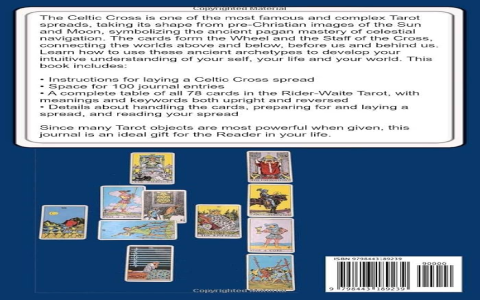
I’d pull out the cards, shuffle ’em real good, and then start laying them down, one by one. The first card, right there in the middle, I knew that was the ‘present’ or the ‘core issue.’ Easy enough. But then that second card, cutting right across it? That one always threw me for a loop. Was it helping? Hurting? Blocking? My brain just short-circuited trying to figure out if it was a good block or a bad block.
Then came the third, fourth, fifth, and sixth cards forming that little staff up the side. My God, I’d look at them and just see a blur. Past, future, conscious, subconscious. How did they even relate? I’d read the explanations in the book, close it, and then look back at the cards, and it all just vanished. It was like trying to hold smoke.
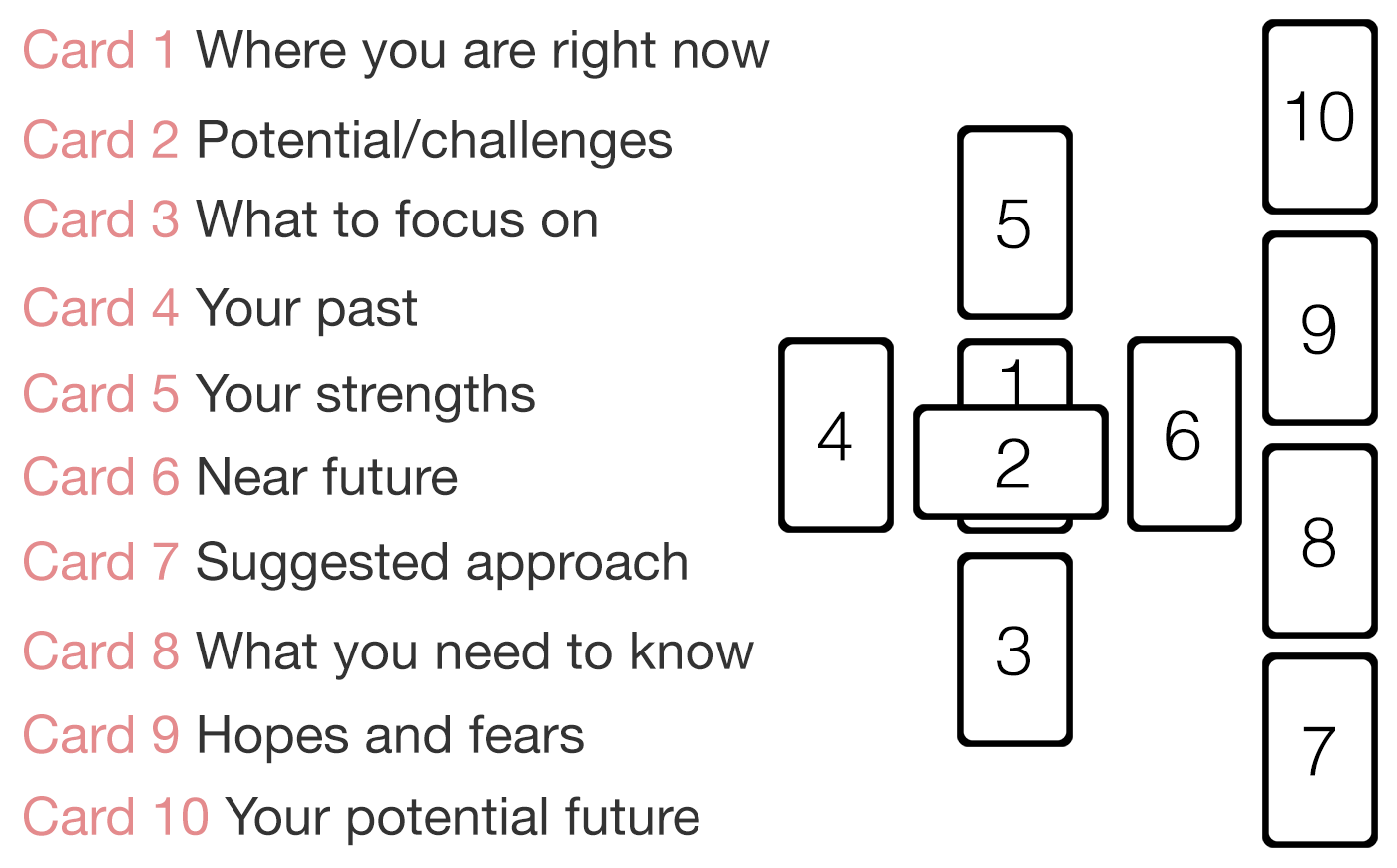
Breaking It Down, Piece by Piece
I realized I couldn’t just memorize it all at once. So, I started small. I literally got a piece of paper and drew the ten positions out. Then, for each position, I wrote down one single keyword that stuck in my head for what that spot represented.
- Card 1 (The Present): What is.
- Card 2 (The Challenge/Cross): What blocks/helps.
- Card 3 (The Conscious): What I know.
- Card 4 (The Unconscious): What’s hidden.
- Card 5 (The Past): Where it came from.
- Card 6 (The Future): Where it’s going next.
Just those six first. I’d deal them out, one at a time, looking at each card, and just asking myself, “Okay, given this card, and what this position means, what’s the simplest message here?” I did that over and over again for days, for different questions. I wasn’t even worrying about the staff cards yet.
Building the Staff: The Realization
Once those first six started to click, I slowly brought in the “staff” or “rod” on the right. That part, Cards 7 through 10, that was the tricky bit because it felt like a mini-story on its own, building up to the final outcome. I started thinking of it like this:
- Card 7 (The Self): My attitude. How I’m feeling, what I’m bringing to the table.
- Card 8 (External Influence): Other people/outside stuff. What’s acting on the situation from beyond me.
- Card 9 (Hopes & Fears): What I want/don’t want. My inner hopes and what scares me about the whole thing.
- Card 10 (Outcome): The end result. Where this whole thing is headed.
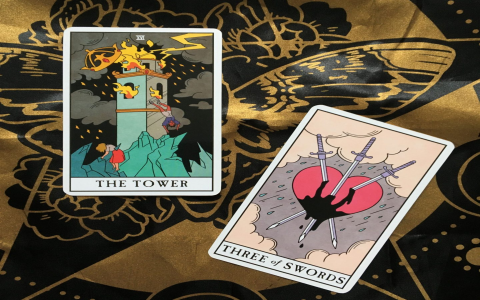
I remember one night, I laid out a spread about a work problem I was having. I had a Tower card in the “Challenge” position (Card 2), which immediately felt heavy. Then I had a bunch of Swords showing up in the “Self” (Card 7) and “Hopes & Fears” (Card 9) positions – lots of thinking, maybe too much overthinking, and a lot of anxiety.
But when I got to the “Outcome” (Card 10), it was the Ten of Pentacles. And suddenly, it clicked. It wasn’t about the immediate chaos of the Tower, but how my attitude and my fears were making it seem worse, but ultimately, with solid steps, it was going to lead to stability and long-term success. It was like the cards were telling me, “Yeah, it’s a mess, but you’ll get through it, if you just stop freaking out so much.”
Connecting the Narrative Threads
That was the big “AHA!” moment for me. It wasn’t just ten separate cards. It was a story. The first two cards set the stage for the core of the situation. Cards 3 and 4 gave me the internal landscape. Cards 5 and 6 showed me the journey from the past to the near future.
And then the staff, Cards 7 through 10, that was the grand finale, showing my role, external factors, my internal emotional landscape, and where all these threads were leading. I started drawing lines in my head, seeing how a card in the “Past” might influence a card in the “Challenge,” or how my “Hopes & Fears” could directly impact the “Outcome.”
It was slow going, no doubt. I probably did hundreds of readings, just for myself, sometimes for trivial stuff, just to practice. I’d sit there, spread out the cards, and instead of trying to remember what each position meant, I’d just let the energy of the spread wash over me, connecting the pictures, allowing the story to unfold naturally.
Now, when I lay out a Celtic Cross, it feels like I’m reading a book that’s already open to ten pages at once. It’s still complex, yeah, but it’s no longer a jumbled mess. It’s a powerful tool for really digging into something deep, getting a full 360-degree view of whatever’s on my mind. And it all started with just breaking it down, one little keyword, one position at a time.