
So, here’s a thing I got into, kinda by accident, a while back. I was poking around my grandma’s old stuff after she passed, you know, clearing out the attic, and I came across this really old, dusty book. It wasn’t a novel, not a cookbook, nothing I recognized. Just this thick, worn-out thing with some weird symbols on the cover. Turns out, it was some version of the I Ching, the Book of Changes. Never heard of it before, sounded like something out of a fantasy movie, honestly.
I almost tossed it into the “donate” pile. What was I going to do with an ancient Chinese fortune-telling book? But for some reason, I just couldn’t. It felt… heavy. Not just in weight, but like it had some stories packed into it. So, I kept it. Threw it on my bedside table and promptly forgot about it for a few weeks.
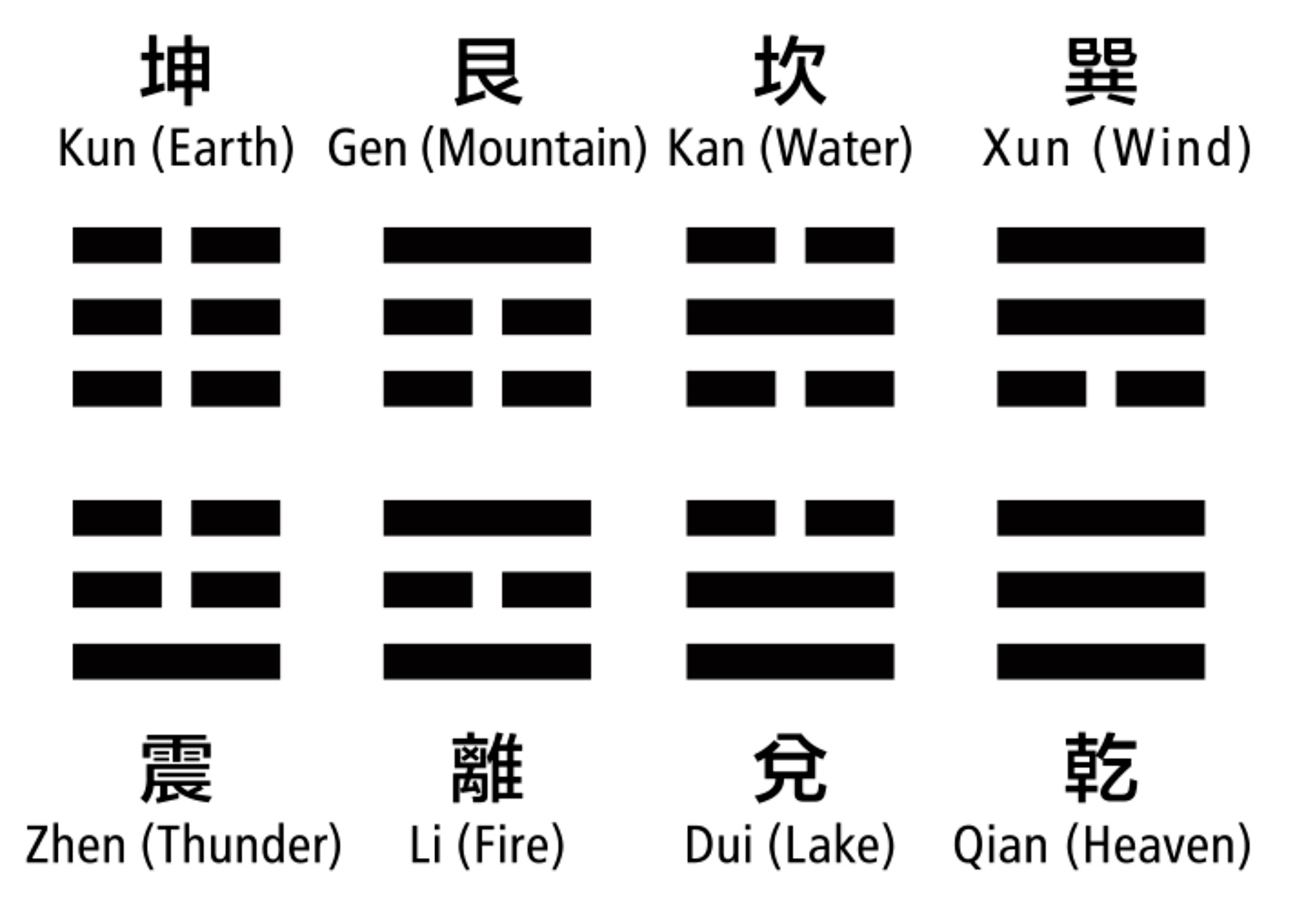
One rainy Saturday, no plans, scrolling through endless stuff on my phone, I saw that book again. Just staring at me. I picked it up. Man, it was confusing. All these lines, broken and solid, stacked up six high. Hexagrams, they called ’em. And the text? Even weirder. Sounded like riddles, old proverbs, really abstract stuff. I read a few passages, my brow furrowed so hard it probably left a permanent dent. What was this even supposed to mean? Like, “The creative. Heaven. Vigor. Success through perseverance.” What the heck does “Success through perseverance” have to do with six solid lines?
I kinda just gave up for a bit. Thought, “Well, that was a bust. Some old mystical stuff I’m never gonna get.” But then, I remembered something about people using coins to get readings. So, I figured, why not? If I’m gonna dismiss it, at least I should try to do it properly, right?
My First Tries at Cracking the Code
I dug out three old coins – just quarters, nothing fancy. Found some basic instructions online, super simple ones. You toss ’em six times, record the lines, and that makes your hexagram. Each toss gives you a solid line (yang) or a broken line (yin). Simple enough, even for my brain on a lazy Saturday.
My first question to the universe, via these quarters, was something dumb like, “What should I have for dinner?” Because, you know, gotta start small. I got my lines, drew out my hexagram. Then I went back to the old book, trying to match my drawing to one of the 64 patterns. Took me forever, felt like a kid doing a maze. Found it. Read the interpretation. It was something about “waiting” or “nourishment.” I mean, yeah, I was waiting for dinner, and dinner is nourishment. Coincidence? Maybe. But it definitely felt… odd. Like it wasn’t just random words.
I tried it again, this time with a slightly more serious question. Something about a decision I was wrestling with at work. Again, tossed the coins, charted the hexagram. Found the corresponding text. This time, it hit a bit closer to home. It talked about “obstacles” and “moving forward cautiously.” And damn if that wasn’t exactly what I was feeling about that work situation. It didn’t give me an answer, but it described my internal state so well, it was kinda spooky.
That’s when I stopped thinking of it as fortune-telling and more like a mirror. Not telling me what will happen, but reflecting what is happening inside me or around me in a way I hadn’t articulated myself. That was a big shift for me. Instead of just trying to read the definitions, I started to feel them, to connect them to my own experiences.
I didn’t try to memorize all 64 hexagrams, no way. That’s a librarian’s job, not mine. What I did was, every now and then, when I had a knot in my stomach about something, or just felt really confused, I’d grab those coins. I’d ask a question, toss them, and then I’d just sit with the hexagram. I’d read the main judgment, the image, and try to really let those weird, ancient words seep in.
- First, I’d just observe the lines. Are there more solid or broken? Does it feel heavy or light?
- Then, I’d read the main ‘judgment’ – a short, cryptic phrase. What’s my gut reaction to it?
- After that, I’d check the ‘image’, which describes the inner and outer trigrams, often using natural metaphors like “mountain above lake” or “wind over heaven.”
- Finally, I’d try to put it all together, not as a prediction, but as a way to understand the current energies or patterns at play in my situation.
It was a slow process, this “understanding their meaning.” It wasn’t about studying definitions. It was about seeing how these ancient patterns, these fundamental forces described by those six lines, played out in my everyday life. One of the hexagrams, I remember, was about “conflict.” And sure enough, when that one came up, I was usually in the middle of some sort of disagreement, big or small. It didn’t tell me who was right or wrong, but it just made me aware of the nature of the situation.
It became a tool, not for answers, but for reflection. Like, if I kept getting hexagrams about “obstruction” or “difficulty,” it usually meant I was pushing too hard against something, or not seeing an alternative path. It kind of nudged me to pause, to look at things differently. It was never telling me what to do, but it was giving me a framework to think about my situation. It helped me step back from the immediate emotion and see the bigger picture, the underlying currents.
And that’s what this whole journey has been. Not about memorizing what each of the 6 (or 64, really) hexagrams means in a textbook sense. It’s about developing an intuition for their patterns, for the ebb and flow of things. It’s like learning a new language, but instead of speaking words, you’re learning to speak in patterns of change. And honestly, it’s still an ongoing thing. Still confusing sometimes, still surprising others. But it’s a practice that’s oddly grounding, making me feel a bit more connected to… well, everything, I guess.