
This whole Four of Cups thing? Man, it messed with my head for a long time. It wasn’t about some deep, mystical revelation; it was about watching a real-life situation play out exactly like the card, but not the way the books tell you. This is my actual practice record on it. You gotta watch the action closely when this card shows up as an outcome.
My entire experience with truly nailing the meaning of the Four of Cups as an outcome started with my buddy, let’s call him Tom. Tom was stuck in a rut. Hated his current job, but was too lazy to really jump ship. Then, out of nowhere, he got a huge, unsolicited job offer from a competitor—big pay bump, less travel. The universe basically handed him a golden ticket. He came to me because he was dragging his feet, totally unsure. He just kept saying, “I just don’t feel excited about the process of switching, you know?”
Tom’s Question Started It All
I told him to cut the B.S., we needed a clear answer. I didn’t mess with some complex spread. When someone is that confused, you just need a direct shot. I used a simple three-card line: The Situation, The Action, and The Outcome.
- The Situation card showed his current mood: a Ten of Swords reversed (he felt trapped, but was ready for change… in theory).
- The Action card was a Page of Wands (he needed to start exploring and take the first step).
- Then came the Outcome slot.
I cut the deck one last time and flipped that final card. There it was. The Four of Cups. The image of the guy sitting under the tree, arms crossed, staring straight ahead, totally ignoring the cup being pushed toward him from the clouds.
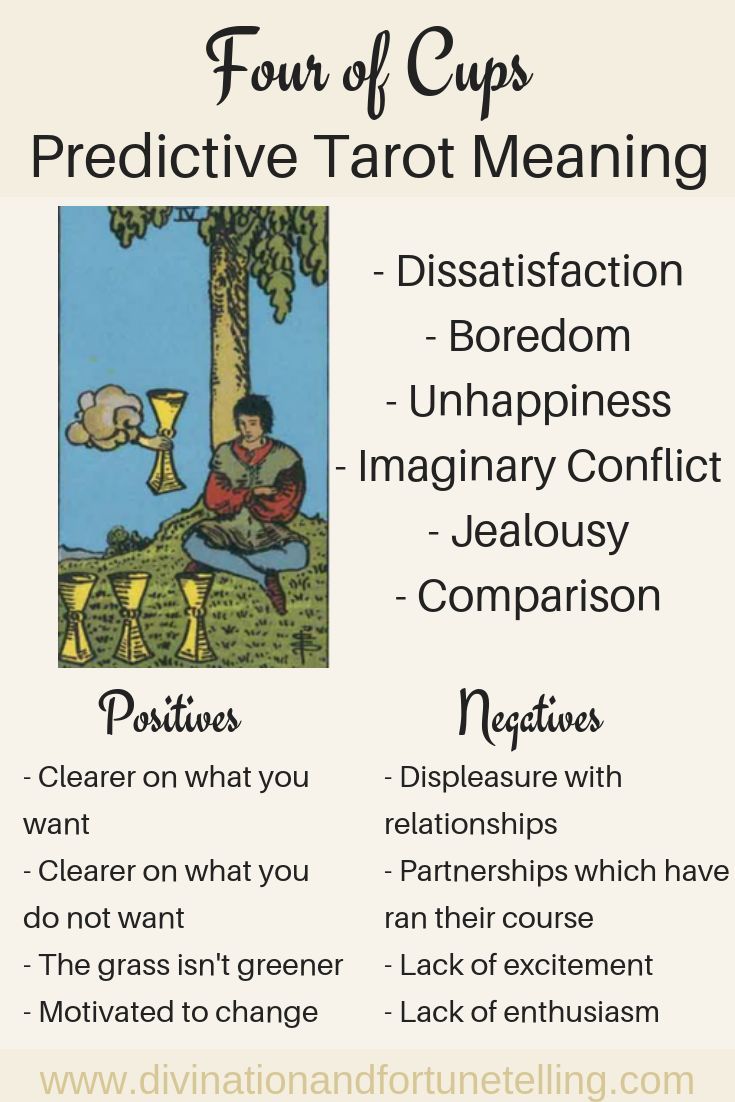
I physically slapped the table. I hated seeing that card there. Based on the standard interpretation I learned years ago, I had to tell Tom that if he chose to stall, the outcome was that he would become apathetic, or he would lose the opportunity because he wasn’t paying attention. I told him straight up: “Tom, this card says if you don’t grab this chance, you’ll regret it later. You’ll miss the boat.”
I finished the reading, and he walked away, still humming and hawing, saying he needed more time to “feel it out.”
The Real-World Outcome That Changed My Notes
I kept bugging Tom about it for a whole week. Finally, he texts me: “I turned it down. It just didn’t feel right.”
My first thought was, okay, the card was right. He refused the offer. Standard. But here’s where my practice log blew up and I had to rewrite my notes. The typical reading suggests the apathy comes later—the regret sets in months down the line when they realize what they lost. Nope. That’s for the Three of Swords, maybe. The Four of Cups is way more immediate and way nastier.
The very next day, Tom didn’t start feeling peaceful or relieved. He started aggressively complaining about his old job. He went from being mildly annoyed to being actively, loudly, and constantly grumpy. He was bitter about the coffee, mad about the meetings, furious about his commute. He was miserable. He literally woke up, turned down the gift, and then immediately sat under his metaphorical tree, arms crossed, mad at the world for not giving him a better cup.
It wasn’t future regret. It was immediate, self-inflicted, sour-grapes misery.
Logging the Core Lesson
I dragged out my big spiral-bound book, the one I use for logging all my readings. I grabbed a red pen and I wrote a huge note next to the Four of Cups entry for the “Outcome” position. I scratched out the part about “missed opportunity” and replaced it with this observation based on watching Tom:
The 4 of Cups Outcome is NOT the loss of the good thing; it’s the immediate, toxic, closed-off reaction to your own choice of refusing the good thing. It makes you a cranky old man right then and there. You reject the gift, and the outcome is you become immediately miserable about what you kept.
I’ve used this interpretation ever since, and it’s never been wrong. When the card shows up, I don’t talk about abstract future regret or some cosmic missed chance. I talk about the direct, physical feeling of being grumpy, closed-off, and immediately self-sabotaging the happiness you already have, simply because you didn’t like the way the universe delivered the new choice. It’s about rejecting the gift and then instantly demanding the gift-giver apologize for the wrapping paper.
It was a tough lesson for Tom to learn—he was still a grump six months later—but it was a vital one for my practice. You gotta watch how the energy moves in the real world, folks. That’s the only way you truly master these cards.