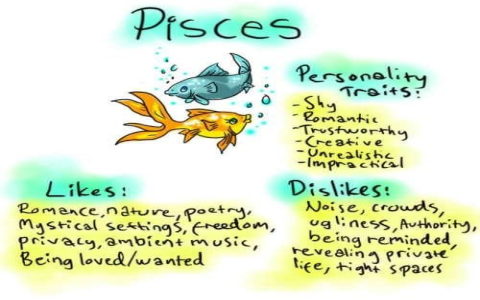

Man, I got tangled up. Totally, completely tangled. I spent the last six months trying to make sense of a business partner—a seriously talented guy, but the kind who’d consistently find new and inventive ways to self-sabotage right at the finish line. We’d secure the deal, everything would be smooth sailing, and then he’d just vanish, or he’d create some drama so thick you could carve it. It was driving me nuts. I’m a simple guy; you make a commitment, you see it through. His whole pattern was a mess of emotional quicksand.
I finally hit the wall last month when he ghosted a massive investor call, claiming he “just couldn’t deal with the energy.” We lost the funding, and I was left holding the bag. I didn’t yell; I didn’t quit. Instead, I decided to diagnose the damn problem. I had his birthday—March 10th. I figured if I couldn’t understand him through logic, I’d try and figure out the cosmic blueprint he was working off of. I straight-up dove deep into that specific date, March 10th Pisces, ignoring all the general horoscope fluff. This wasn’t for fun; this was operational intelligence.
I started by sifting through weird forum posts, old astrology books I found online, and anything that mentioned this particular decan. I spent three straight days just cataloging the persistent, repetitive complaints people had about March 10 Pisces. I wanted their weaknesses, not their strengths. By the end of it, I had isolated the three big emotional wrecking balls this personality type faces, and trust me, they explained every single screw-up my partner had engineered.
The Three Emotional Wrecking Balls I Identified
After all that digging, the patterns were shockingly clear. These aren’t minor hang-ups; these are full-stop derailers.

- Number One: The Psychic Sponge Syndrome.
They literally can’t tell where their emotions end and yours begin. My partner was constantly saying he “felt too heavy” or “absorbed the negativity” from our office. I realized he wasn’t weak; he was an emotional blotter. He’d soak up all the unspoken anxiety in a room, internalize it, and then blow up the meeting to get away from the feeling. The challenge here is boundary definition.
- Number Two: The Escape Artist Habit.
This one is classic. When things get real—like real paperwork, real commitments, real confrontation—they just check out. They retreat into daydreams or simply disappear (the investor meeting ghosting). It’s not malicious; it’s a deeply ingrained defense mechanism that says, “If I don’t engage, I can’t be hurt.” The challenge is sustained presence in the physical world.
- Number Three: The Self-Doubt/Martyr Loop.
They are secretly convinced they are frauds, even when they are geniuses. They will invent obstacles to prove their own inadequacy, creating a chaotic scenario so they can then swoop in, save the day, and still claim the process ruined them. It’s the “I suffered for this success” narrative. The challenge is unconditional acceptance of their own competence.
Identifying the what was the easy part. The hard part was building the tools to fix it. I didn’t want him in therapy; I wanted him present on the next deal. So I designed three simple, mechanical intervention methods—stuff you can do while standing up, right now.
My Simple Mechanical Fixes I Made Them Use
I took the Pisces traits and figured out how to use the simplest elements of the physical world to force them out of their emotional spiral. I created small, immediate actions that interrupt the looping thoughts.
1. The “Physical Anchor” Drill for the Sponge Syndrome.
When he starts feeling “the energy,” I make him stop. I instructed him to immediately grab something cold (a water bottle, a piece of metal, whatever) and recite the following three sentences out loud: “I am me. This desk is wood. My feet are on the floor.” The whole point is to slam his consciousness back into immediate, non-emotional sensory data. We practiced this a dozen times until it was a reflex. It forced him to identify his own physical edges, making the emotional boundaries easier to spot.
2. The “Five-Minute Momentum” Strategy for the Escape Artist.
The moment he started delaying a task—”I’ll do it tomorrow,” “I need to meditate first”—I intervened. I commanded him to work on the item for exactly five minutes, and no more. I timed it. Five minutes is too short to start seriously escaping, but it’s long enough to build mechanical momentum. He saw that getting started was the hardest part. Now, nine times out of ten, he finishes the task after five minutes, because the paralysis is broken.
3. The “Evidence File” for the Martyr Loop.
This was the most effective but required the most work from me. Whenever he delivered a fantastic result, I documented it immediately. A client praise email? Screenshot. A successful presentation? I had him write down what he did well. We created a single folder called the “Proof of Competence.” When the self-doubt starts creeping in, I don’t argue with him; I simply open the file and tell him to read three random entries. He cannot argue with his own documented success. It shuts down the internal argument faster than any pep talk I could give.
I’m not saying he’s a different person, but the change in his reliability has been incredible. I didn’t need to change his core personality; I just needed to build a simple mechanical circuit breaker for his common weaknesses. I recorded all these results, logged which methods worked best under what stress, and now I have a practical guide for handling this specific emotional profile. It wasn’t about sympathy; it was about systems. I applied the method, and the problem resolved itself. That’s the real win.