
Man, I hit a wall hard about three months ago. You know that feeling when your personal projects—the stuff you actually want to do—start eating up more time and causing more stress than your actual day job? That was me. I was running three separate little side hustles, nothing massive, just trying to diversify a bit, right?
I was using Trello for one, Notion for another, a pile of spreadsheets for the third. My documentation was everywhere. My email accounts were breeding like rabbits. Every time I sat down to work, I spent the first hour just trying to remember where I left the damn notes for Client A versus Project B. It was absolute structural rot. I tried to patch it. I tried to merge the spreadsheets. I tried to force a new organizational system onto the existing mess. It failed. Every time. I spent two weekends straight just trying to ‘optimize’ the current setup, and I only made it worse. I almost threw my laptop out the window, seriously.
I knew I needed to stop forcing it. I had to rip the band-aid off, but I didn’t know which direction to rip. I pulled out my three pennies, you know the drill, and I sat down asking the clearest question I could muster: How do I dismantle this overwhelming infrastructure I built, and rebuild something that actually works without driving me nuts?
I threw the coins. Six times. The result came back: Hexagram 59, Huan, Dispersion. Now, if you look at the structure, it’s wind over water. It’s scattering. My immediate gut reaction was, ‘Great. The universe is telling me to give up, to let my efforts scatter into the wind.’ I felt deflated. I almost just closed the book right there and went back to drowning in my Trello boards.
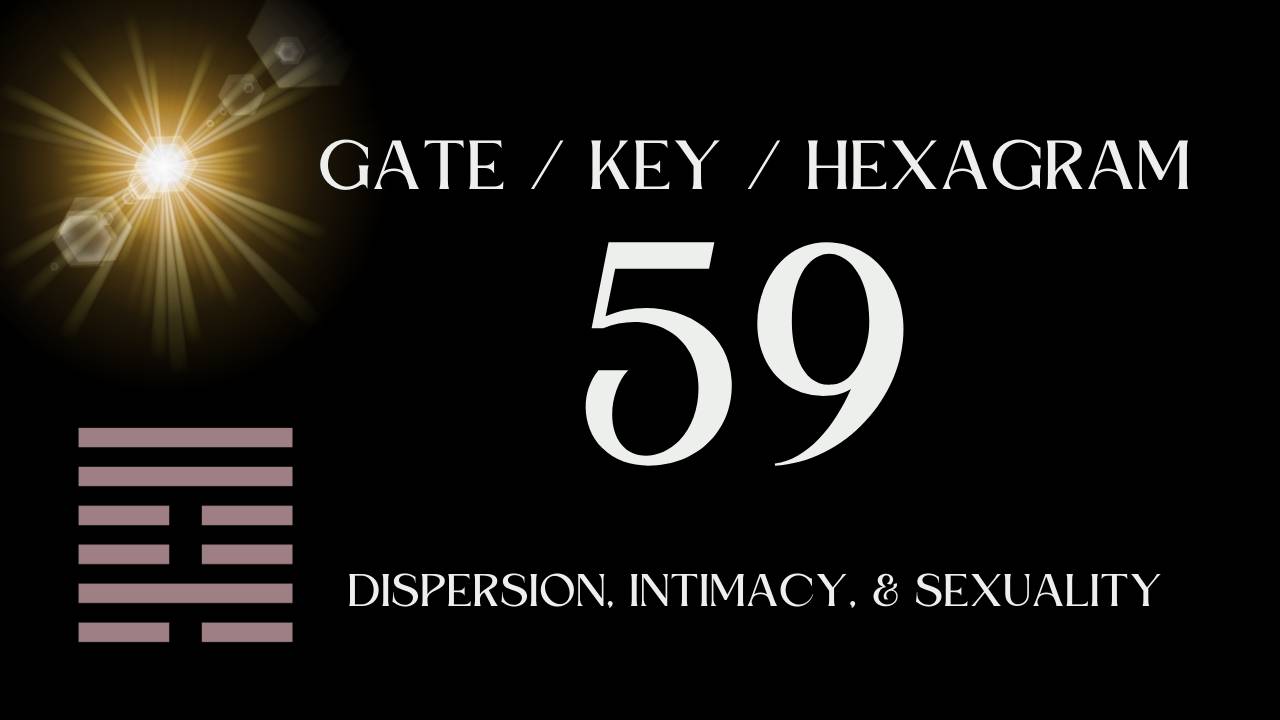
But I sat with it for a day, chewing on the meaning. Dispersion. It wasn’t about giving up the goal; it was about accepting the current structure had to dissolve. It’s like when a flood happens—the water takes everything, but it also cleans the slate so you can build on solid ground again. I realized the key advice of 59 wasn’t just to scatter, but the movement that comes after the scattering: unification and focusing on a central purpose, like a shared ritual or spiritual goal that brings people back together after chaos.
Executing Dispersion: The Great Digital Purge
I decided to follow the advice literally. I embraced the dissolution. This wasn’t optimization; this was demolition. I walked through the whole process in two phases, and I want to be clear, the first phase was terrifying.
- Phase 1: Aggressive Deletion. I first looked at all those tools I was using. Trello? Killed it. The specialized project management software I paid $15 a month for? Canceled the subscription and archived the data. All those micro-email accounts I set up for “branding”? Closed them all down, redirecting everything to one primary inbox. It felt destructive, chaotic, and frankly, stupidly risky, but I kept picturing that wind over water, moving everything out of the way. I spent a whole evening just hitting the ‘delete’ or ‘archive’ button on stuff I had painstakingly built over two years. I just let it go.
- Phase 2: Defining the Center. The IChing says you need a unifying force once you’ve scattered. My unifying force was simplicity. I committed to a single, plain text-based knowledge base for all three hustles. No fancy cards, no complex databases. Just markdown files. If it couldn’t fit into the single, shared knowledge base, it wasn’t critical. I bought one yearly subscription to a plain text syncing tool, and that was it. I made that tool my new temple, my center of gravity.
I had to actively resist the urge to immediately start sorting the mess I had just created. That’s the hard part of 59; you have to let the dust settle. For a week, my workflow was a disaster, deliberately. I knew where things used to be, but I was forcing myself to use the new, single point of entry for everything new that came in.
I won’t lie, during that week, I almost lost a small contract because I couldn’t find an old invoice template fast enough. I had scattered the damn file in the purge, and it took me hours to dig it out of an archive folder. The temporary chaos felt justified, though. It showed me which parts of the old system were truly necessary and which I could truly let go of.
The Outcome: Unification and Flow
After the initial mess cleared, the efficiency jumped through the roof. Suddenly, instead of cycling through three different tools to check on three different projects, I was scanning one database. Everything new I generated went straight to that central spot. The mental overhead just vanished. I got two weekends back that I used to spend ‘managing’ the system instead of doing the actual work.
The advice from Hexagram 59, to dissolve the faulty union and unify around a new, central, simple purpose, was exactly what I needed. The key advice I want to pass on from this practice is that sometimes, optimization isn’t about making the current system better; it’s about realizing the current structure is fatally flawed and needs to be completely dispersed before any real unification can happen. Don’t be afraid to create temporary chaos if the current order is actively draining your energy. That temporary scattering is often the only way to find your true, simple center again.