Man, reading tarot combinations used to kill me. Seriously. When I started out, I thought I had it figured out. I sat there, deck in hand, flashcards everywhere, trying to cram fifty different card meanings into my skull. The standard advice is always, “Know your cards,” right? So I knew my cards. I knew what the Three of Swords meant on its own. I knew the High Priestess. Piece of cake.
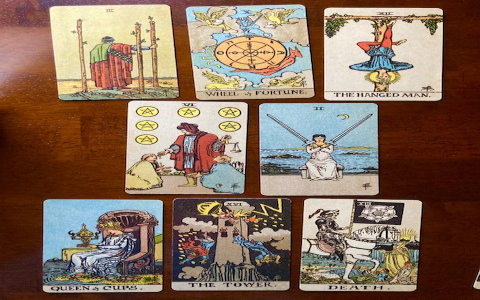
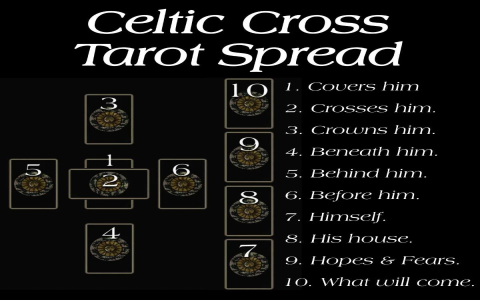
Then I pulled out a big spread—a nine-card snapshot or maybe the dreaded Celtic Cross—and everything broke. It wasn’t just nine separate pieces of information staring at me; it was nine completely different languages screaming at the same time. The books tell you to “weave a narrative,” but they never tell you how to actually stitch together the Tower, a perfectly innocent Two of Cups, and the World card in a sensible sequence.
I wasted years on this. I’d finish a reading for a friend and feel like a total fraud, just babbling generic advice because my brain couldn’t process the sheer volume of data. I remember one reading I did for my nephew, a relationship spread. He was all stressed out about his career path, not his love life, but I was determined to use that specific spread layout. I got the Devil, the Four of Wands, and the Page of Swords all next to each other. The Devil is addiction or bondage. Four of Wands is celebration and stability. Page of Swords is messy communication or curiosity. Trying to combine “stable celebration of bondage and messy curiosity” just led to gibberish. I literally told him, “You should probably just quit your job,” which was unhelpful garbage. He looked at me like I had three heads.
The Moment I Threw Out the Rule Book (and the Flashcards)
That failure with my nephew really got under my skin. I realized the established methods were built for people who have endless time to meditate on every nuanced shade of meaning. I don’t have that time. I work a full-time job, I have kids, and frankly, I need to get to the point fast. I needed a street-level guide, not a scholarly treatise.
So, I stopped trying to read the combination as nine individual cards. I started reading it like a newspaper headline: fast, brutal, and focusing only on the main action verbs. I developed this rough-and-ready, three-step method that cuts through the noise. It works, every time. It’s what allowed me to actually start feeling confident and quick with complex spreads, and frankly, it’s what saved me from quitting tarot entirely.
Here’s the process I hammered out, focusing only on the energy flow and ignoring those subtle keyword differences until the very end.
Step 1: The Energy Blockers – Mapping the Major Tension Points
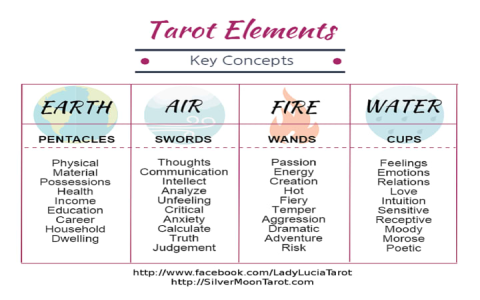
The first thing I do now is scan the spread for the elemental balance, but in a very rough way. Don’t worry about Fire, Water, etc., just look for the obvious conflict zones. You need to know where the power is jammed up.
- Swords and Pentacles together: This is a conflict between thinking/planning (Swords) and reality/money (Pentacles). The tension is usually stalled action due to over-analyzing the budget. If you see five or more of these mixed up, you know the core problem is mental static meeting practical necessity.
- Too many Cups (more than 5) with no Swords: This isn’t conflict; this is mush. Too much emotion and zero structure. The person is drowning in feeling and can’t make a decision. The whole story will be about indecision and avoiding necessary confrontation.
- The Major Arcana Pile-up: If you have three or more Majors next to each other, they dominate the entire reading. They are the topic of the reading. You treat all the Minors around them like they are just footnotes. A Major Arcana clump means destiny is kicking in, and the smaller details barely matter.
By just grouping the spread into two or three “tense zones,” you already know the central emotional friction. Forget the individual card meanings for this step. Just identify the pressure cookers.
Step 2: The Action Chain – Reading Only the Adjacency
This is the real secret sauce. I stopped looking at the spread as a grid and started seeing it as a timeline dictated by where the cards physically sit. Forget the official positions (Future, Past, Hopes, Fears) for a second. We’re reading visually.
You find the strongest card (usually a Major, or a Court card that represents the person asking). Then, you read the card immediately to its left as the cause and the card immediately to its right as the effect. It’s a simple A-B-C story.
Example: Justice (A) -> Six of Swords (B) -> Ten of Pentacles (C)
I don’t care what the layout sheet says they mean. I read it this way:
Justice (A): A formal decision or legal fairness leads to Six of Swords (B): Moving away from troubled waters which results in Ten of Pentacles (C): Long-term family stability/wealth.
See how simple that is? The meaning becomes instantly clear: The final judgment (A) allows the necessary transition (B) that secures the lasting foundation (C). When you apply this simple cause-and-effect chain to every three-card group in a large spread, the overall narrative builds itself without you having to force it.
Step 3: The Rough Keyword Drill – Just Three Words Max
Only after I have mapped the tension points and built the rough action chain do I bring back the card meanings. And I only use three words, tops, for any card. No complicated esoteric nonsense.
- Eight of Wands: Fast movement. News coming.
- Queen of Swords: Sharp intellect. Cuts ties.
- The Hermit: Quiet reflection. Seeking truth.
When you go back to your chain from Step 2, you plug these rough keywords in. If the narrative still flows, you nailed it. If it doesn’t, you know exactly which link in the chain is weak, and you only have to re-read that one spot, not the whole nine-card spread.
This whole approach—ignoring official spread positions initially, focusing on elemental balance and card adjacency—changed my game. It took me from a nervous fraud who took ten minutes per card to someone who can slap down a large spread and give a coherent, actionable narrative in under five minutes. Stop memorizing the book. Start seeing the story flow. It’s rough, it’s fast, and it actually works in the real world.