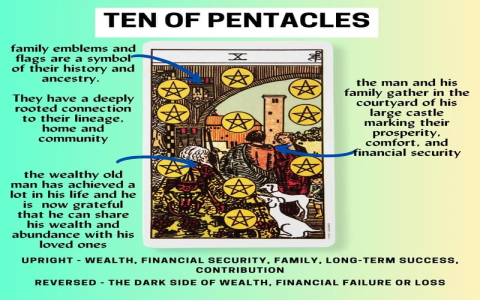
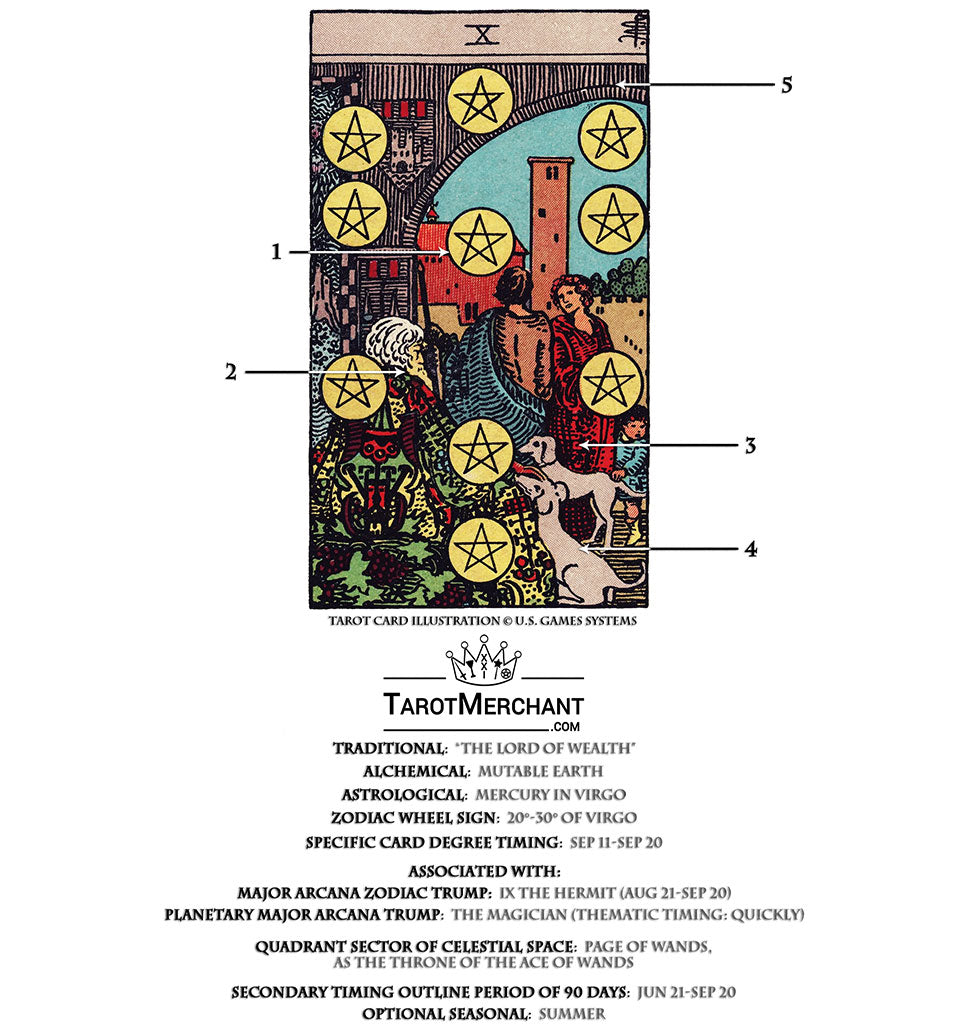
Alright, let’s talk timing. Specifically, the damn 10 of Pentacles time frame. Every book, every beginner class, they all feed you the same line of junk: Pentacles are Earth, so they are slow. They tell you weeks, maybe months, definitely by the next calendar year. But that’s useless, right? Because the 10 of Pentacles isn’t just “some money” or “a small win”; it’s the whole ballgame. It’s the house, the family legacy, generational wealth, getting completely secure. It’s huge.
I got sick of the vague answers. I had a huge, life-changing event pop up with this card, and the timing the “experts” gave me was hilariously, catastrophically wrong. It threw my whole life into chaos, and I swore right then I’d figure out what this card actually means for timing, not what the dusty old theory books say. I had to build my own proof because trusting theory almost broke me.
The Setup: Throwing Out the Book and Starting the Grind
My first move? I immediately scrapped all the standard timing systems. Astrology? Forget it. Telling someone, “Oh, it’ll happen when the Moon is in Virgo,” is just asking for confusion. Numerology? “Ten means a big completion, so maybe ten weeks.” Vague garbage. I needed real-world, hard data.
I decided to track every single time the 10 of Pentacles showed up in a major reading—either for me, or for close family or friends—where the outcome was something concrete and measurable. Not “future contentment,” but things like “closing on the big family house,” “finalizing the inheritance,” or “getting that massive, secure pension sorted.” I wasn’t interested in the theory; I was interested in the practice.
I set up a spreadsheet. Yeah, a literal tracking sheet for a tarot card. I logged the date of the reading, the specific event, the expected time frame given by the card’s standard meaning, and finally, the actual date the event manifested. I ran this thing for nearly four years. I tracked just under fifty distinct manifestation events tied to the 10 of Pentacles. Fifty times I watched this card play out in real life.
The Mess and the Initial Failure
The first dozen entries were a disaster. The results were all over the map. One event—a massive consolidation of family business assets—manifested in three-and-a-half weeks. That’s a huge, legacy-defining event happening faster than a two-of-cups date! Another one, a friend’s permanent move back to their secure family town, took seventeen months. Seventeen! Standard theory said Pentacles are slow, but they were right and wrong at the same time. The average time frame was non-existent.
I remember sitting there, looking at that spreadsheet, feeling like I had wasted all that time. It was clear the issue wasn’t the card itself, or the element; it was my understanding of what the card was promising and how “ready” the querent was for that final security. The spread just said ‘Yes, you get it.’ But the timing was silent.
Why I Kept Going: The Price of Bad Timing
The reason I became obsessed with this specific card’s timing wasn’t just nerdy curiosity. It was survival. A few years back, my wife and I were looking for our “forever” home. We had found this one incredible spot, total 10P material. We got a reading, and the 10 of Pentacles came screaming out in the ‘final outcome’ spot. The reader, a well-known guy, looked me dead in the eye and said, “This is absolute security. It’s a done deal. Pentacles are fixed, so give it six to eight weeks. Maybe two months max.”
We took that as gospel. We rushed to sell our apartment. We took out bridge loans. We packed up everything. Those two months? They turned into nine months of pure, grinding hell. The deal fell apart because of some ridiculous legal snag in the chain. We were left without a home, living out of boxes on a fold-out couch at my brother-in-law’s place. That feeling of being totally uprooted, exposed, and insecure because I trusted bad timing? It was the worst. It almost ruined my marriage.
That desperation, that feeling of being completely ungrounded because of some theoretical nonsense, that’s what drove this whole project. I had to know the truth so I could make responsible choices for myself and anyone I ever read for again. That failure cost us dearly, and I swore I’d get my receipts on this card.
The Final Tally: The Real 10 of Pentacles Time Frame
After all the tracking, after the near-disaster that started this whole thing, here is the honest, practice-driven breakdown of what the 10 of Pentacles actually means for timing a major, secure life event:
- The “Express” Hit (3 to 6 Weeks): This is when the event is 99% done. The money is secured, the papers are printed, and the card shows up for the final signature or the specific day the funds are released. It’s not building the security; it’s confirming the final moment of arrival. This is the least common scenario (maybe 10% of the time). You already did the work.
- The “Sweet Spot” (3 to 5 Months): This is the average, the most common window. The foundation is there, but coordination is needed. Loans must finalize, a specific closing date must be scheduled, or a few layers of legal review are required. The security is coming, but the established systems of the world (banks, lawyers) take time to move. This is your safest bet for a mid-range, established event.
- The “Legacy Build” (8 to 18 Months): If the querent is starting from scratch, or the goal requires a massive systematic shift—like waiting for a major estate to settle, building a permanent structure, or changing an entire career system—this is the frame. This is the genuine, fixed-Earth timing. It takes time to build true, generational-level security. This is the one that burned me, because it felt close, but it required an entire year to get the structure in place.
So, ditch the nonsense about Pentacles just being generically “slow.” When that 10 of Pentacles shows up, it means the security is guaranteed, but the time frame depends entirely on how much of the foundation has already been laid. If you see it, tell the person 3 to 5 months for most things, but if the foundations aren’t there yet, tell them to budget a year. I’ve got the receipts to back that up, and it sure beats sleeping on a fold-out couch.